Futurist Jim Carroll

Mastodon post archive · 2022–2026
Archived from mastodon.futurist.info · 4209 posts
← All months

May 2026 · 19 posts

← April 2026June 2026 →
May 1, 2026 · 10:07 AM UTC

“Never put yourself in a position in which you regret what you didn’t do. - Futurist Jim Carroll

--
Futurist Jim Carroll is writing a series, The Art of the Infinite Pivot, based on 36 lessons from his 36 years as a solo entrepreneur, working as a nomadic worker in the global freelance economy. The series is unfolding here, and at pivot.jimcarroll.com.
--

Forty-one years ago today, I stepped onto a plane in Halifax, Nova Scotia, heading toward a national office in Toronto, Ontario, and a future that didn't yet have a name.

I was a Chartered Accountant by trade, but my heart was already in the "pipes"—the emerging, messy world of computer connectivity. For three years, I had already immersed myself deep into the opportunities that came from the online world, understanding the power of global collaboration, online research, knowledge acceleration, and disruptive ideas. In my heart and in my mind, I just knew that something big was on the way, and I wanted to be a part of it.

The move came about because I had been identified by the national office as someone who could implement the opportunities of that 'something big on a nationwide basis. They offered me a position to chase my ideas, albeit in a bigger, well-funded way - and I accepted.

That moment in time was the final, terrifying step in my ultimate pivot. I wasn't just changing roles; I was abandoning "certainty" for a wild risk on what would eventually become the Internet. And yet, I've never looked back with regret at the decision I made to move forward. I often wonder what my world would be like today if I had let that regret define my future.

41 years on, I know I did the right thing.

Many times in your life, you will need to confront similar big decisions. Should you make the big, bold leap? Should you take the daring jump into the unknown? Can you really hold your breath, close your eyes, take the plunge into tomorrow, and hope for the best?

If you don't, you might end up regretting not doing the most important thing you should have done.

Never put yourself in that situation.

The greatest risk you will ever take is the risk of staying where you are when you know you were meant for what’s next.

Forty-one years later, my accounting title is an artifact, but the decision to chase a future without a name remains the smartest move I ever made.

Don't ask what happens if you fail.

Ask what happens if you never try at all.

---

Futurist Jim Carroll has been in the online world since 1982. He's seen it go from its nascent beginnings to the massive global machine that it is today.

**** **** **** **** **** **** **** **** **** **** **** **** **** **** **** **** **** **** **** **** **** **** **** **** ****

Original post: jimcarroll.com/2026/05/decodin

★ 2 • ↻ 0 original
May 4, 2026 · 10:22 AM UTC

“Never put yourself in a position in which you regret what you didn’t do. - Futurist Jim Carroll

--
Futurist Jim Carroll is writing a series, The Art of the Infinite Pivot, based on 36 lessons from his 36 years as a solo entrepreneur, working as a nomadic worker in the global freelance economy. The series is unfolding here, and at pivot.jimcarroll.com.
--

Forty-one years ago today, I stepped onto a plane in Halifax, Nova Scotia, heading toward a national office in Toronto, Ontario, and a future that didn't yet have a name.

I was a Chartered Accountant by trade, but my heart was already in the "pipes"—the emerging, messy world of computer connectivity. For three years, I had already immersed myself deep into the opportunities that came from the online world, understanding the power of global collaboration, online research, knowledge acceleration, and disruptive ideas. In my heart and in my mind, I just knew that something big was on the way, and I wanted to be a part of it.

41 years on, I know I did the right thing.

Many times in your life, you will need to confront similar big decisions. Should you make the big, bold leap? Should you take the daring jump into the unknown? Can you really hold your breath, close your eyes, take the plunge into tomorrow, and hope for the best?

If you don't, you might end up regretting not doing the most important thing you should have done.

Never put yourself in that situation.

The greatest risk you will ever take is the risk of staying where you are when you know you were meant for what’s next.

Don't ask what happens if you fail.

Ask what happens if you never try at all.

---

Futurist Jim Carroll has been in the online world since 1982. He's seen it go from its nascent beginnings to the massive global machine that it is today.

**** **** **** **** **** **** **** **** **** **** **** **** **** **** **** **** **** **** **** **** **** **** **** **** ****

Original post: jimcarroll.com/2026/05/decodin

★ 1 • ↻ 1 original
May 5, 2026 · 10:24 AM UTC

“You should never wait for the world to catch up to your obsolescence." - Futurist Jim Carroll

Here's a truth to consider: your gut feels the pivot long before your head admits it.

Sometimes we are forced into a career change or pivot. Other times, we need to make the decision on our own.

Either way, it's a gut-wrenching moment.

I know that when I was thinking about leaving the corporate world behind back in 1990, I was pretty miserable. My career track had changed due to a merger; my opportunities vanished; my successful path forward was now in doubt. And yet, I struggled mightily with the idea of moving from career certainty to becoming a self-employed unknown chasing a future that didn't yet exist.

But I went through with it, and it turned out to be the right thing to do.

Here's what I've learned in the decades since: when a pivot is forced on you, you go through something a lot like the stages of grief: shock, denial, anger, and eventually acceptance. When the pivot is your own choice, the same thing happens, just in slow motion. You sit in denial that things have to change. You get angry that they have to. And eventually, hopefully, you accept it.

As I wrote in my book Now What? Reinvention and the Role of Optimism in Finding Your New Future, the faster you get to acceptance, the quicker you can reinvent.

So how do you get to acceptance? You learn to recognize the signals. Some triggers will tell you when it's time:

The expiry of your relevance

The "soul-crushing" signal

The need for reinvention velocity

The "Sunday night" signal

Read about them in the full post.

And one trigger that sits apart from the rest: if you are drowning your career misery in substance abuse, the pivot question has already answered itself. The first move isn't a career change. It's getting help, from yourself or from someone trained to give it. The pivot comes after.

Here's the filter, though: not every bad week is a signal. Burnout, a difficult client, a rough quarter — those are weather, not climate. The triggers above only matter when they become persistent, structural, and patterned. If a vacation fixes it, it wasn't a pivot signal.

You should never find yourself thinking "I should have jumped sooner."

Because when you wonder if it's time to pivot, it probably already is.

---
Futurist Jim Carroll is writing this series, The Art of the Infinite Pivot, because he thinks he has mastered the art of the pivot!

**** **** **** **** **** **** **** **** **** **** **** **** **** **** **** **** **** **** **** ****

Original post: jimcarroll.com/2026/05/decodin

★ 2 • ↻ 0 original
May 6, 2026 · 9:39 AM UTC

"Every 'no' is a vote for a future 'yes.'"- Futurist Jim Carroll

--
Futurist Jim Carroll is writing a series, The Art of the Infinite Pivot, based on 36 lessons from his 36 years as a solo entrepreneur, working as a nomadic worker in the global freelance economy. The series is unfolding here, and at pivot.jimcarroll.com.
--

In the global freelance economy, the pressure is relentless: take everything that comes through the door. Chase every lead. Never leave money on the table. Never turn down an opportunity.

Hustle.

I get it.

I've lived that reality since 1990.

Here's the thing - the tone for the hustle is set right out of the gate. When you're in year one of running your own thing, every email feels like the difference between making it or not. You say yes to almost anything because the alternative of an empty calendar is terrifying. I've lived that reality for a long time. My early years on my own were a frantic hustle of saying yes to anything that looked like it might pay the bills.

But here is what I've learned in the 36 years since: the pivots that worked weren't built on the things I said yes to; sometimes, they were built on the things I said no to.

Every no is a vote for a future yes.

From 1998 to 2001, I was doing, perhaps, 80 to 100 events per year. 4 keynotes in 4 days in 4 different cities all across North America. Travel, a full schedule, prep time. It was exhilarating, but at the same time, I was raising a young family with my wife, writing even more books about the Internet, participating in book tours, and so much more. And when the dot.com collapse happened in 2001, I was not quite prepared to reinvent - to pivot - at the speed the future demanded. It wasn't until 2004 that I finished writing my book, What I Learned from Frogs in Texas: How to Save Your Skin with Forward Thinking Innovation, that I was able to escape the tech lable nd move into the innovation/futurist branding.

I look back sometimes and realize I lost three years that might have made my pivot to a new future easier. I didn't - because I didn't make time for the necessary pivot, because I was too busy saying yes.

I learned a very powerful lesson.

It's hard to think about, but ultimately, saying YES to everything will eventually get in the way of your success. 
Keep reading the full post in the link: there's more on why saying NO is the best way to get to YES more often.

---

Futurist Jim Carroll has come to learn that the potential negativity in saying NO is one of the most powerful ways to get to the positivity of saying YES.

**** **** **** **** **** **** **** **** **** **** **** **** **** **** **** **** **** **** **** **** **** **** **** **** ****

Original post: jimcarroll.com/2026/05/decodin

★ 1 • ↻ 0 original
May 7, 2026 · 10:22 AM UTC

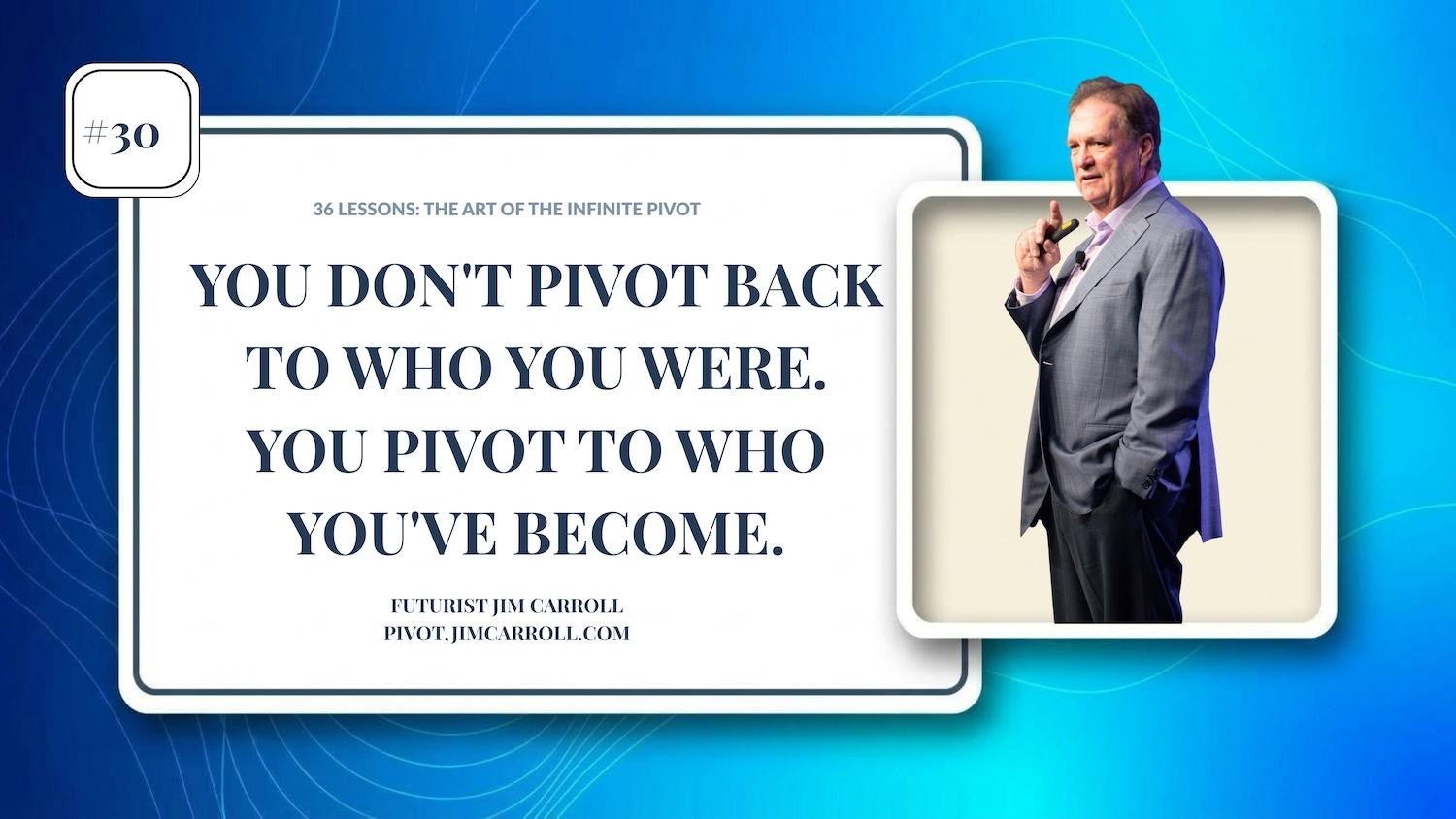
"You don't pivot back to who you were. You pivot to who you've become."- Futurist Jim Carroll

--
Futurist Jim Carroll is writing a series, The Art of the Infinite Pivot, based on 36 lessons from his 36 years as a solo entrepreneur, working as a nomadic worker in the global freelance economy. The series is unfolding here, and at pivot.jimcarroll.com.
--

Most failed pivots aren't pivots to the wrong future.

They're pivots to a future that no longer exists.

I've been writing about this idea for years, in one form or another. Back in 2022, I framed it this way: "Confront today as it is, not as you want it to be, but face tomorrow as you want it to be, rather than just accepting it for what it might be!" In another post, I put it more bluntly: "Don't chase the reality you want. Create the reality you can pursue." I've long recognized that when it comes to reinvent yuorself for the next opportunity, you need to adapt to new realities, not existing ones.

Earlier this year, when Mark Carney stood up at Davos and said, "We actively take on the world as it is, not wait around for a world we wish to be," he was saying the same thing. I knew immediately why that line landed globally and drew so much attention. He's repeating this idea everywhere he goes, stating it again pretty clearly at a global summit in Armenia. The dude must be following me. (-;

And yet, it captured something most leaders, most companies, and most individuals quietly refuse to do.

They want to pivot, but only to a future they already imagined.

They want the past to come back, just rearranged.

They want their old career, with a fresh coat of paint.

That's not a pivot.

That's nostalgia in a different outfit.

Here's what I've learned the hard way: the future will not negotiate with your desires and wants. It doesn't care about your plans, your nostalgia, your investment in who you used to be. The future shows up as it is, sometimes brutal, sometimes accelerated, and often inconvenient.

You either align with it, or you don't.

In a fast-evolving future, keep in mind you can rarely pivot back to who you were. You pivot to who you've become.

Take on the future as it is. Work towards the outcome from where you actually are. Build the strength required for what's next, not the strength you used to have.

Because the only pivot that ever works is the one made from reality.

---

Futurist Jim Carroll believes that most people need a reality check when they are trying to reinvent themselves.

**** **** **** **** **** **** **** **** **** **** ****

Original post: jimcarroll.com/2026/05/decodin

★ 1 • ↻ 0 original
May 8, 2026 · 10:01 AM UTC

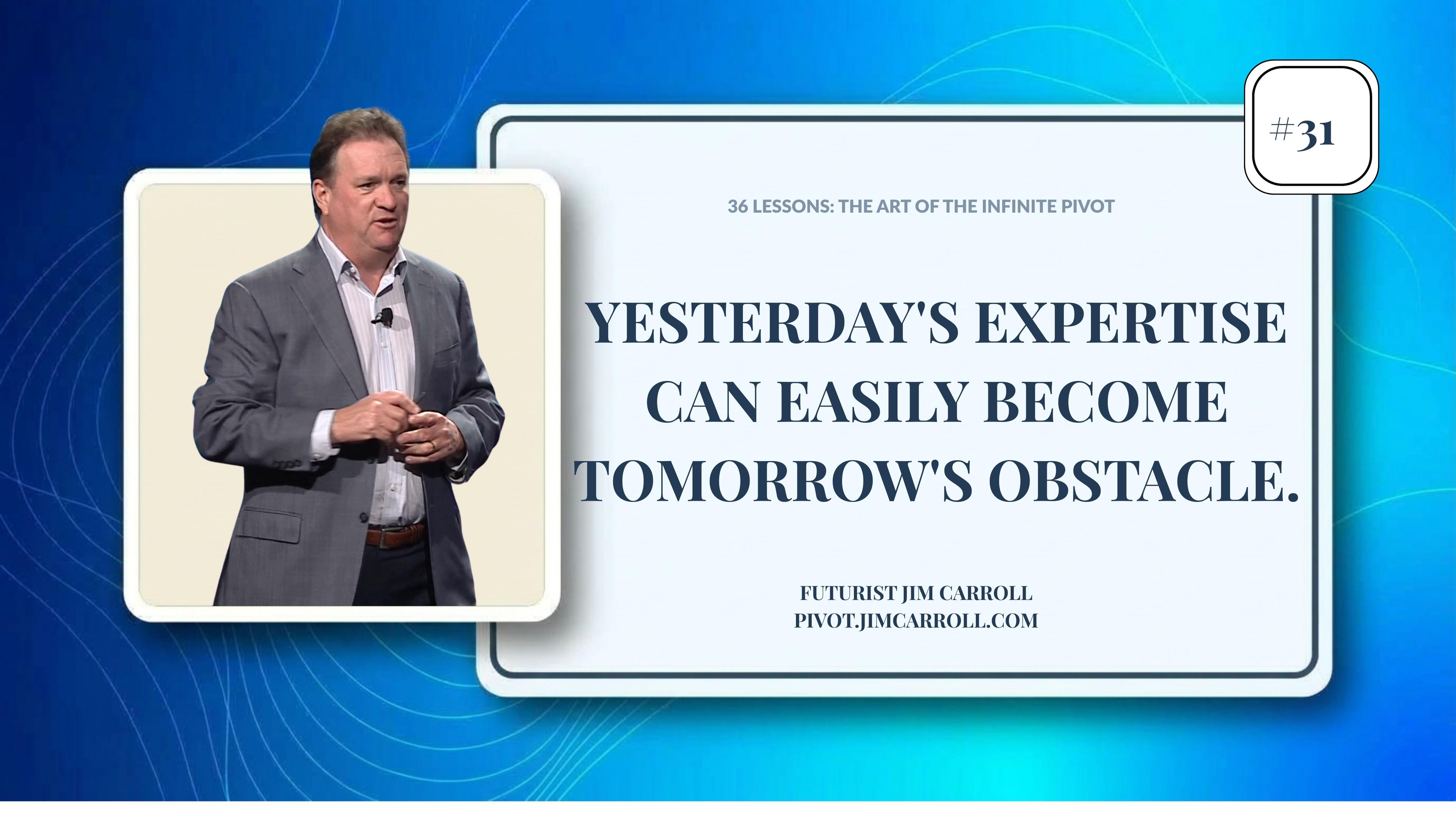
"Yesterday's expertise can easily become tomorrow's obstacle." - Futurist Jim Carroll

--
Futurist Jim Carroll is writing a series, The Art of the Infinite Pivot, based on 36 lessons from his 36 years as a solo entrepreneur, working as a nomadic worker in the global freelance economy. The series is unfolding here, and at pivot.jimcarroll.com.
--

Here's something most successful people don't want to hear: the deeper your expertise, the more it can quietly hold you back.

It's a paradox, actually. The thing that got you here is the same thing that can make you blind to what's coming next. The hard-won knowledge, the pattern recognition, the muscle memory of how things work in your industry can become the very things that buttonhole you as someone who is too narrow to take on wide challenges.

I avoided this several times by learning how to learn. I'm a huge fan of the phrase "learning is what most adults will do for a living in the 21st century," because that literally defines my career.

In the late 1980s, I was a Chartered Accountant (I still am, but now known as a CPA). Auditing, finance, and taxes. A solid, respectable career. Then I started watching what was happening with personal computers and corporate networking, and I knew the future wasn't in ledgers. So I retired the accountant idea, and taught myself enough about technology to become an IT and email consultant when most people in business hadn't yet sent their first email!

By 1991, I was going deeper. I'd been doing online research since 1984 (that's not a typo), and I realized that the skill had become a profession. I built a service offering specialized online research to companies, law firms, and private investigators. At one point, Air Canada was a client, hiring me to do detailed research related to M&A activity.

By the mid-1990s, I'd retired that role too, and was going deep into the Internet itself, eventually writing the first of many books about the technology, and becoming a recognized voice on the disruptive impact of early Web trends. That earned me a healthy living as a speaker advising companies and associations on how this would change their world.

Yet by the early 2000s, I retired that expertise as well. The dot-com collapse made the "Internet expert" label feel dated. So I rebuilt myself as a "Futurist, Trends and Innovation Expert," which required learning something else entirely: how to do deep, fast, industry-specific trend research. That last skill is the one I've leaned on hardest in the years since, but which went back to the skills I first started picking up in 1984.

Every one of these moments started with me not knowing what I was doing.

So what does all of this mean?

Learn to learn.

Go wide. When you're an expert, your reflex is to defend what you know. 
---

The ultimate compliment Jim has received in his career? One fellow came up to him after a keynote and asked how long he had been a farmer.

Original post: jimcarroll.com/2026/05/decodin

★ 0 • ↻ 0 original
May 11, 2026 · 10:06 AM UTC

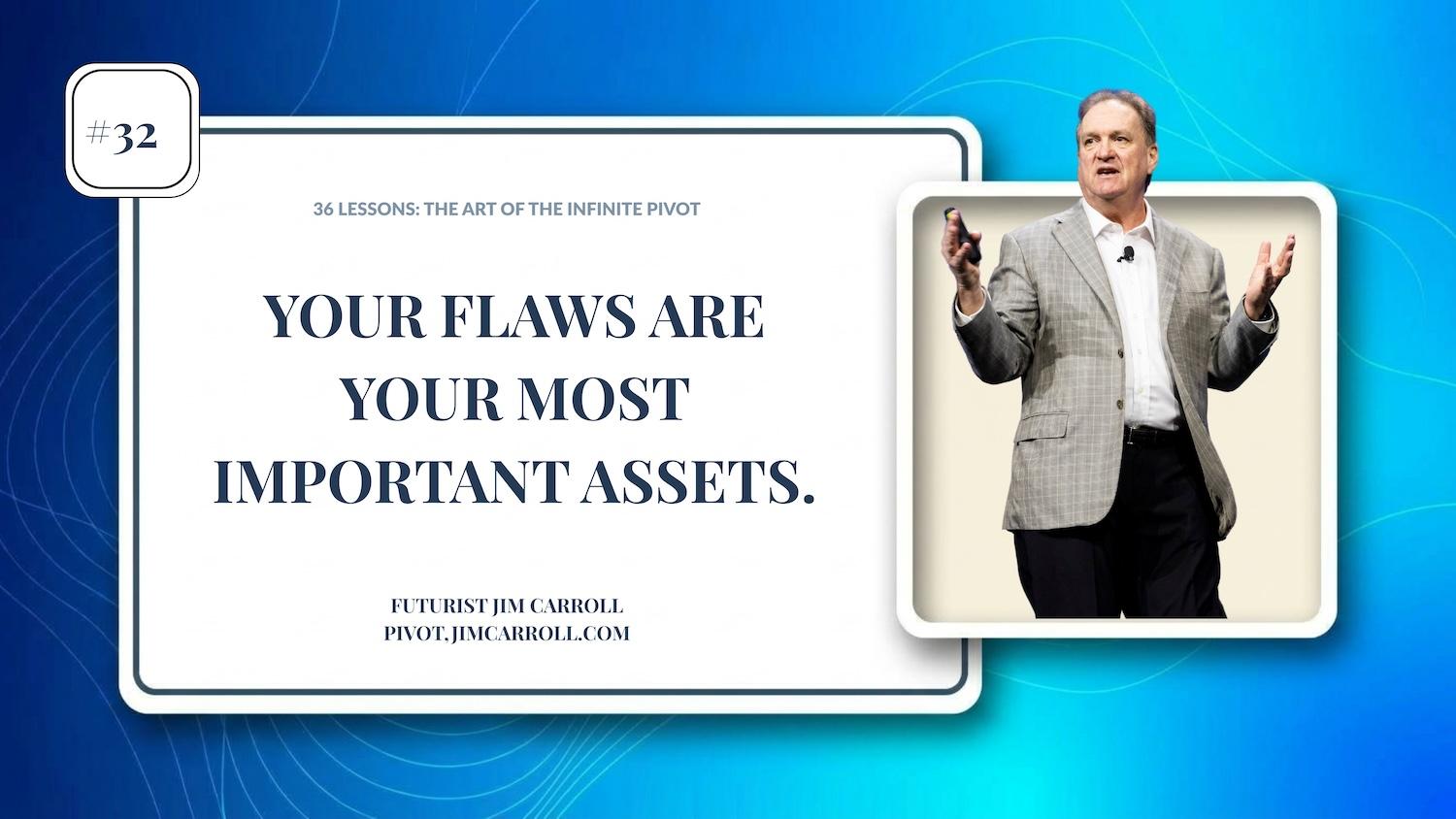
"Your flaws are your most important assets." - Futurist Jim Carroll

--
Futurist Jim Carroll is writing a series, The Art of the Infinite Pivot, based on 36 lessons from his 36 years as a solo entrepreneur, working as a nomadic worker in the global freelance economy. The series is unfolding here, and at pivot.jimcarroll.com.
--

We're all talking about the importance of authenticity in an era of artificiality.

After all, in 2026, AI can generate almost anything. A photorealistic headshot of a CEO who doesn't exist. A polished podcast in your voice, on a topic you've never thought about, in under five minutes. A speaker highlight reel with fake audiences and fake standing ovations. Perfection has become cheap, instant, and infinite.

Here's the paradox of this new era: when perfection is everywhere, perfection stops counting. When everyone can be perfect, being perfect doesn't matter anymore.

What stands out now is the opposite. The stumble, the scar, the story too weird to be invented, the detail too specific to be faked, the mistake too painful to be generated. In a world full of synthetic perfection, your flaws are the only authentication signal that proves you are real. It might become the most important signal for your future success.

And in that context, I must confess: I didn't know I had been operating on this principle for most of my career! For 36 years, I've quietly leaned on my flaws without naming them as assets. It was just how I operated. Now, when everyone is talking about AI, I can see how important my flaws are.

An example? In 1995, I appeared on a VHS tape called The Family Guide to the Internet, presented by IBM. I billed myself as a "Global Internet Consultant" and walked a fictional family through the wonders of newsgroups and proper Internet etiquette. It is, hands down, the most embarrassing thing I have ever done. It still exists on YouTube. And get this - I often tell people about it and send them the link. Most people would have buried it, but don't try to hide from it. It's proof that I was actually there, in the room, at the moment the future was being figured out.

While not as interesting, there have been many other stumbles, errors, and foibles along the way.

So tell the embarrassing story. Quote the bad review. List the failed venture. Publish the rejected pitch. Show the wreckage.

Let the cracks show.

----
Futurist Jim Carroll is proud of his flaws and mistakes.

**** **** **** **** **** 

Original post: jimcarroll.com/2026/05/decodin

★ 2 • ↻ 0 original
May 12, 2026 · 10:12 AM UTC

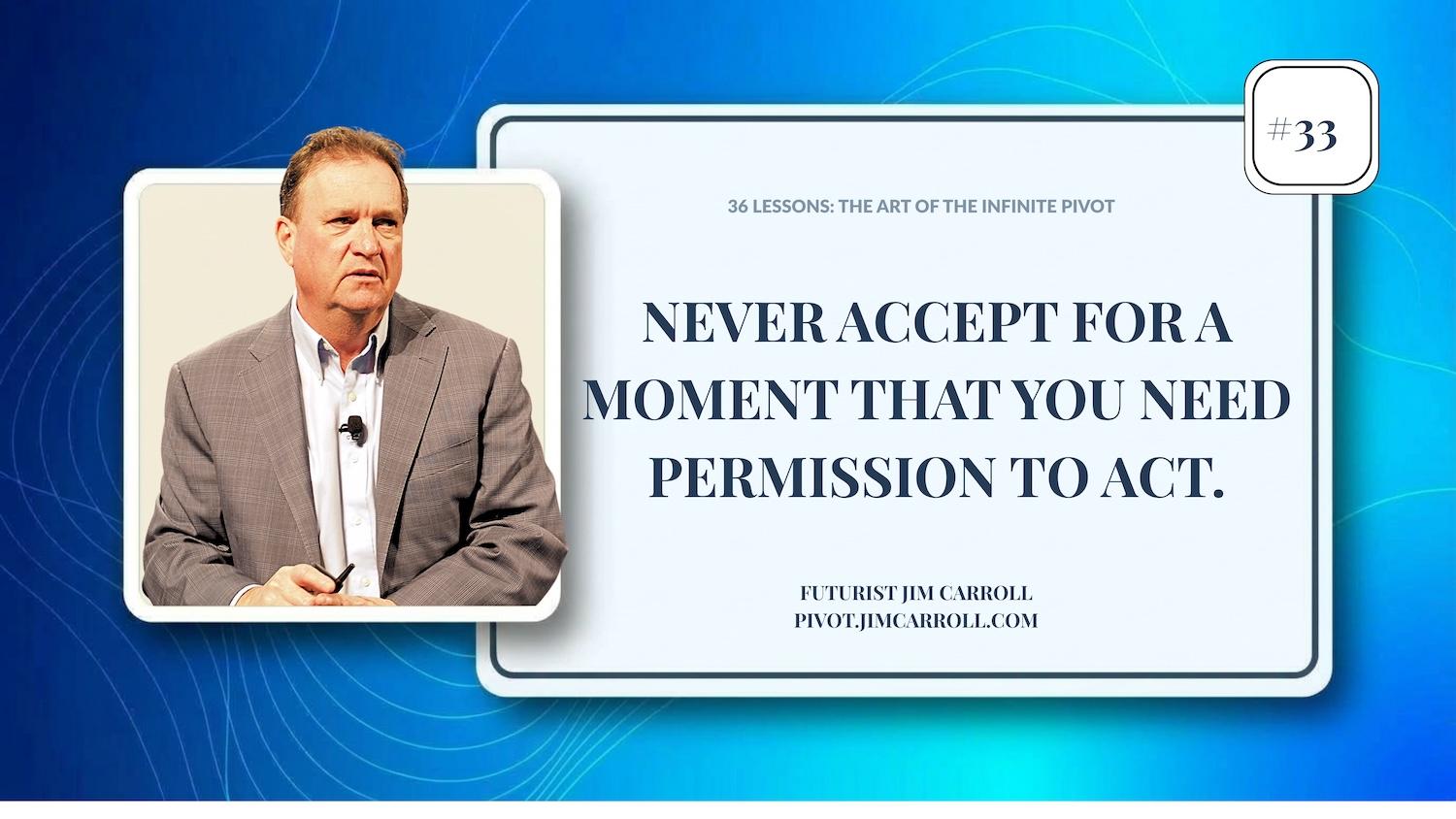
"Never accept for a moment that you need permission to act." - Futurist Jim Carroll

--
Futurist Jim Carroll is writing a series, The Art of the Infinite Pivot, based on 36 lessons from his 36 years as a solo entrepreneur, working as a nomadic worker in the global freelance economy. The series is unfolding here, and at pivot.jimcarroll.com.
--

Most people wait for permission to do anything. It's the absolutely wrong thing to do.

And I've carried this belief into my keynotes and writing - for more than three decades, I have walked on stages and told audiences not to wait for permission.

Don't wait for permission to innovate. Don't wait for permission to launch the side project. Don't wait for permission to chase the trend. Don't wait for permission to bypass the committee, the budget cycle, the layers of approval, or the gatekeepers. I have told the same thing to Fortune 500 CEOs, to manufacturing executives, to healthcare leaders, to agricultural producers, to insurance boards, to startup founders.

Most of them have nodded and have then gone home and continued waiting for permission to change their own lives.

That's the part you need to think about if you are on the cusp of your next pivot or reinvention. Telling yourself not to wait for permission to do it is much harder.

Here's the quiet truth of every solo career, every freelance pivot, every reinvention I have ever made or watched anyone else make: if you wait for permission from someone else, you will be waiting a long time. Nobody is going to send you an email saying it's okay, you can change now. No manager is going to walk into your office and announce that the time has arrived to reinvent yourself. No mentor is going to authorize your pivot for you.

The decision you are waiting for is your own, and often, yours alone.

I once wrote a post — part of a litany I published in a Daily Inspiration entry — that contained dozens of "Never accept for a moment that..." lines. Things like: never accept that progress is impossible; never accept that fear should guide your decisions; never accept that giving up is acceptable. Buried in that list was the one I think matters most. Never accept for a moment that you need permission to act.

I meant it then. I mean it more now.
.
So what can you take from all this? Stop waiting for someone to tell you it's time. Make the decision. Take the step. Walk into the next thing. Most of the regret I have ever heard from people deep into their careers has been about the pivot they didn't take because they were waiting for someone, somewhere, to say it was okay.

Nobody is coming to permit you.

Give it to yourself.

Then move.

--
Futurist Jim Carroll believes that getting through the decision process is the hardest part of a career reinvention.

Original post: jimcarroll.com/2026/05/decodin

★ 1 • ↻ 0 original
May 13, 2026 · 9:58 AM UTC

"Pivots are often made years before they happen." - Futurist Jim Carroll

--
Futurist Jim Carroll is writing a series, The Art of the Infinite Pivot, based on 36 lessons from his 36 years as a solo entrepreneur, working as a nomadic worker in the global freelance economy. The series is unfolding here, and at pivot.jimcarroll.com.
--

Every pivot you have ever admired looks like a single moment - it's a big decision, a sudden leap, a brave day.

It's not.

It's something you've been thinking about for a long time. But more important than that, it's something that you were getting ready for long before you knew you were getting ready.

Why is that? Because every pivot worth making was paid for in advance, in the tiny experiments, side projects, abandoned hobbies, accidental curiosities, and detours that didn't make sense at the time. Here's the truth: people who appear to have made a sudden leap had been quietly preparing for it for years. They just didn't know it.

I have a name for it: experiential capital.

It's a topic that sits at the center of one of my books, Think Big, Start Small, Scale Fast! It's also a phrase and concept that draws a LOT of attention in every keynote I do, because it offers up a concrete mindset pathway for moving forward.

What is it? Experiential capital is the deep, practical knowledge you can only acquire by doing something. By running small experiments, by tinkering, by playing with technologies and ideas before they matter. It cannot be bought. It cannot be downloaded. It is earned, slowly, through accumulated small bets.

And here's why it matters - it's getting you ready for a new trend, new opportunity, or new disruption, long before it happens. In that way, it accelerates your timing of adoption or aligning to a different future. That's important because in an exponential world, the gap between when a trend appears and when it dominates your industry has collapsed from decades to months. You no longer have time to start learning about a major shift when it arrives. The only people who can pivot fast enough are the ones who were quietly playing with the new thing for years before anyone called it important.

The ones who invested in it through 'experiential capital.'

That is the entire argument of the "Start Small" part of the Think Big, Start Small, Scale Fast mantra that I share! People love Think Big. They love Scale Fast. They often skip past the middle, where the actual work happens. Start Small is the discipline of running tiny, low-stakes experiments without yet knowing which one will matter.

You don't run experiments to be right.

You run them to be ready.

---

Futurist Jim Carroll spends many of his days doing a lot of small things.

Original post: jimcarroll.com/2026/05/decodin

★ 0 • ↻ 0 original
May 14, 2026 · 10:14 AM UTC

"Curiosity is your most important asset." - Futurist Jim Carroll

--
Futurist Jim Carroll is writing a series, The Art of the Infinite Pivot, based on 36 lessons from his 36 years as a solo entrepreneur, working as a nomadic worker in the global freelance economy. The series is unfolding here, and at pivot.jimcarroll.com.
--

Be like Curious George.

I'll often share that quizzical observation on stage to an audience of serious business executives - and the fact is, I mean it.

Here's why: curiosity is not a personality trait that allows you to accelerate innovation, spot trends before others do, or think differently in a world in which everyone is thinking the same thing.

It is an economic asset. And in 2026, with the acceleration of AI, it could very well be the single most valuable thing you can own.

Why? In an AI economy, almost everything you can know has been commoditized. Information is free. Expertise is downloadable. Knowledge has lost most of its scarcity. Everyone is pumping out the same stuff as everyone else. Heck, I'm feeling it with what I write and speak about.

In that context, what remains scarce, and therefore valuable, is a mindset of exploration, the ability to explore new ideas, and a willingness to let go of the norms and find new ones. That's curiosity - the actual human drive to follow things down a rabbit hole, to spend an evening reading about something you have no business reading about, or to tinker with something simply because it seems interesting. That drive to explore cannot be outsourced. It cannot be downloaded. It cannot be faked. It is intrinsic to your value.

In the era of AI, curiosity is the one asset that does not lose value.

And it's powerful. I learned this almost by accident. In the early 1980s, I spent thousands of hours on obscure BBS boards, clunky early communication software programs, and bizarre online communities most of my coworkers had never heard of, via. 300-baud and 1200-baud modems. I didn't know what was going on, but I wanted to know more. To a casual observer and to my co-workers, I was wasting my time sitting up till 2 am or 3 am exploring online worlds. They often told me so in blunt terms. I was throwing away my career. I should be doing more important things.

I didn't care. I just wanted to know what this strange new "thing" was. That apparently frivolous curiosity became the foundation of my entire career as an Internet author, a futurist, and eventually whatever it is I am now.

I wasn't lucky. I was curious.

So here is the practical version. Weaponize your curiosity. Schedule it. Defend it. Block thirty minutes a week to chase something you have no business chasing. Read the article outside your industry. Try the tool you don't yet need. Ask the question that makes you sound naive in the meeting.

---

Futurist Jim Carroll is looking forward to reading the entire Curious George series to his new grandson.

Original post: jimcarroll.com/2026/05/decodin

★ 1 • ↻ 0 original
May 19, 2026 · 9:39 AM UTC

Carroll's Law of Inevitable Collapse: "Just when you think things have become pretty bad, remember: the biggest giants don't stumble; they break from the inside out." - Futurist Jim Carroll

It's 2026. And if we all lived in a rational world, we wouldn't be where we are right now. Geopolitical crisis, war, rising inflation - hey, gas prices! (Good thing I have an electric car!)

Oh, and there are three axioms of my law. I've seen this movie before.

The Illusion of Momentum: External metrics (stock price, GDP, market share) will always look spectacular right up until the moment of failure. Momentum is easily mistaken for health.

The Immune System Paradox: When tampered with, the very mechanisms an institution creates to protect itself (bureaucracy, ethics,, the legal system!) are the exact mechanisms that accelerate the internal rot.

The Nonlinear Drop: Collapse does not happen in a predictable, straight line. The internal fracturing happens silently for years; the visible break happens all at once.

How's that for a dose of pessimism!

Happy Monday!

---

Futurist Jim Carroll certainly believes that folks are doing their best to make things worst again!

Original post: jimcarroll.com/2026/05/daily-i

★ 0 • ↻ 0 original
May 20, 2026 · 10:11 AM UTC

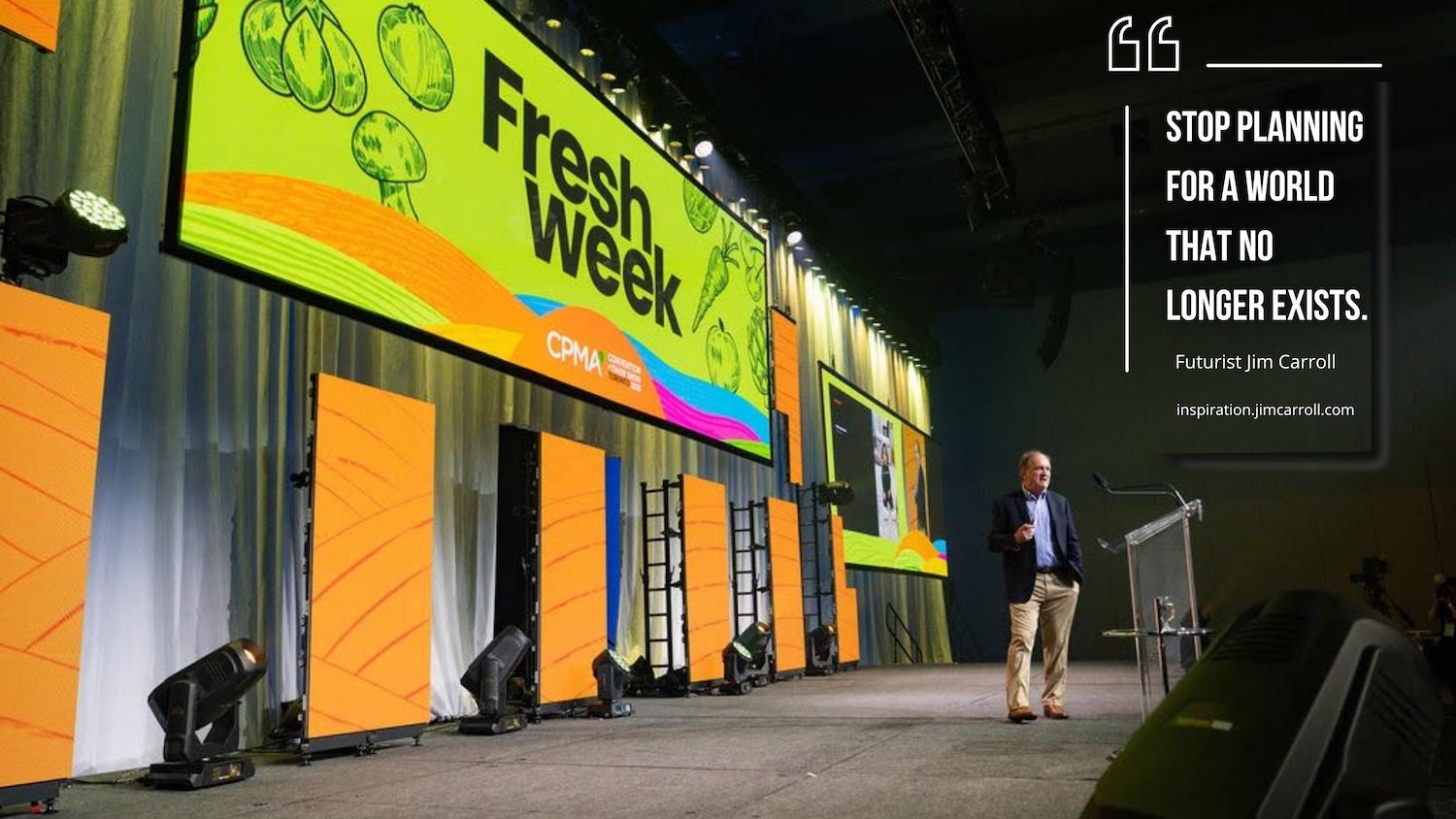
"Stop planning for a world that no longer exists" - Futurist Jim Carroll

I came across an article about my keynote. few weeks ago for the Canadian Produce Marketing Association.

Talk about an industry in the midst of change, challenge and complexity!

The folks over at The Packer ran a summay of my talk in the piece. You can find it here. I also share the full article below.

To summarize? The future of produce - and every other industry - isn't arriving on schedule. It's arriving decades early. Here's a few things I shared to think about:

- Robotics and AI are making 24/7 farming a reality — not a concept

- In volatile times, 10% of organizations become breakthrough performers by doubling down on innovation

- Your next consumer has a 4-second attention span. Simplicity in packaging, branding, marketing isn't optional - it's critical

- Groceries may soon be prescribed to your exact biology

The choice is always the same: panic, do nothing, or innovate.

And overall? My key takeaway for the audience - stop planning for a world that no longer exists!

----

Read the article in the post!

---

Futurist Jim has spoken to several hundred agricultural, food and packaging conferences through the years, and has correctly predicted most of the trends unfolding in the industries today.

Original post: jimcarroll.com/2026/05/decodin

★ 1 • ↻ 0 original
May 21, 2026 · 9:30 AM UTC

"Your comfort zone might be a beautiful place but nothing ever grows there!" - Futurist Jim Carroll

Legacy business models love a comfort zone. They hunker down, build walls, and try to protect the past. People often love the routine they find themselves in right now, and presume that it will always stay that way.

Because it's safe, familiar, comforting.

But in a world moving at ludicrous speed, safety is a dangerous illusion.

Growth doesn't happen when things are easy or in the presence of safety.

It happens out on the messy, unpredictable, and uncomfortable edges. It happens when things are hard. It comes about because you are pushing the boundaries. 

It comes when you get out of the comfort zone of utter sameness, into the risky zone of dramatically different innovation.

And it's often ugly, unpredictable, messy.

As successful people often say, "well, it wasn't pretty!"

Abandon safety. Chase risk!

--
Futurist Jim Carroll's office and work schedule is pretty messy at times.

Original post: jimcarroll.com/2026/05/daily-i

★ 1 • ↻ 0 original
May 22, 2026 · 9:44 AM UTC

"Momentum is better than motivation." - Futurist Jim Carroll

Everyone waits for some motivation in their life to get them going.

The perfect mood. The right energy. The Monday-morning version of themselves. The day they finally "feel ready."

And while they wait, they don't move.

They're stuck.

And that's the trap. Waiting for some motivation involves waiting for some guidance or insight or inspiration to get you going.

Momentum is something else entirely.

It's the simple, brute-force reality of doing something. Once you're moving, even slowly, even badly, even in roughly the wrong direction, it becomes drastically easier to keep moving and course-correct. Direction is a problem you solve after you're in motion.

In my work as a futurist, I see this play out at scale every single week. Organizations stalled by analysis paralysis. Leadership teams who have been "about to" launch their innovation initiative for three years. CEOs waiting for the perfect market signal before making a bold move.

All waiting for some motivation to get them going.

In the meantime, smaller, faster, scrappier competitors are out there, already moving, already learning, already three iterations into something the slow guys are still mulling over.

The future doesn't reward the ones who feel motivated.

It rewards the ones who built momentum first.
So stop waiting to feel ready. Start one small thing. Today.

Remember - momentum beats motivation.

Every.

Single.

Time.

---

Futurist Jim Carroll continues to see a lot of people and organizations who remain stuck in indecision.

Original post: jimcarroll.com/2026/05/daily-i

★ 1 • ↻ 0 original
May 25, 2026 · 9:46 AM UTC

"FOBO is the new FOMO" - Futurist Jim Carroll

We used to panic over missing the next big trend. Today, the real anxiety is standing still while you are told your hard-won expertise has a collapsing shelf life. And there's no doubt that in an exponential world accelerated by AI, what you know today can quickly become irrelevant.

The result? It's called FOBO - the fear of being obsolete. AI has this impact, what with shrieking headlines about workforce layoffs and all.

But panicking is a legacy mindset. You should never wait for the world to catch up to your obsolescence. You should get ahead of it.

That's why the only true antidote to FOBO is speed, learning new skills, and continuous execution of new knowledge. Your future is no longer found in your current knowledge, but in how fast you can adapt and pivot.

Bottom line? Beat the fear of being obsolete by moving faster than the trends can shift. Don't let FOBO freeze you. Go to the point of my Friday post - in an exponential world, momentum beats perfection every single time!

---

Jim Carroll continuously shares the phrase, "Learning is what most adults will do for a living in the 21st century." It's more relevant today than ever before.

Original post: jimcarroll.com/2026/05/daily-i

★ 0 • ↻ 0 original
May 26, 2026 · 9:42 AM UTC

"Pretending that reality doesn't exist, doesn't make reality go away." - Futurist Jim Carroll

I've been reading in the news how the US seems to be prohibiting top infectious disease doctors from sharing advice on dealing with the Ebola outbreak.

Over the years, I've come to conclude that things like this are just part an overall attempt to try to deny reality, rewriting the future in a 'wishful thinking mode' rather than a 'reality mode.' That's fine - anyone can choose to do that, but reality will always get the last word.

But consider the consequence of this type of thinking.

Just because you want to pretend that the climate isn['t at risk, doesn't make the risk go way. Deciding that you don't like electric cars won't make the trend disappear - it just accelerations the dominance of Chinese auto producers and the decimation of the North American auto industry. Pretending that a pandemic didn't happen doesn't make its impact irrelevant. Deciding that there should be rosy economic numbers despite the truth to be found in the real numbers won't make the pain easier for anyone. 

Like I said: anyone can choose to deny reality, but reality will always get the last word.

And the big question is how big will the real, systemic damage and destruction be in the long run?

---
Futurist Jim Carroll covers trends for his clients. You know. the real ones.

Original post: jimcarroll.com/2026/05/daily-i

★ 0 • ↻ 1 original
May 27, 2026 · 9:46 AM UTC

"We are rich in AI potential, but still bankrupt in its application." - Futurist Jim Carroll

We talk constantly about the "promise" of artificial intelligence, but there is a massive difference between a brilliant algorithm and actual, real-world implementation.

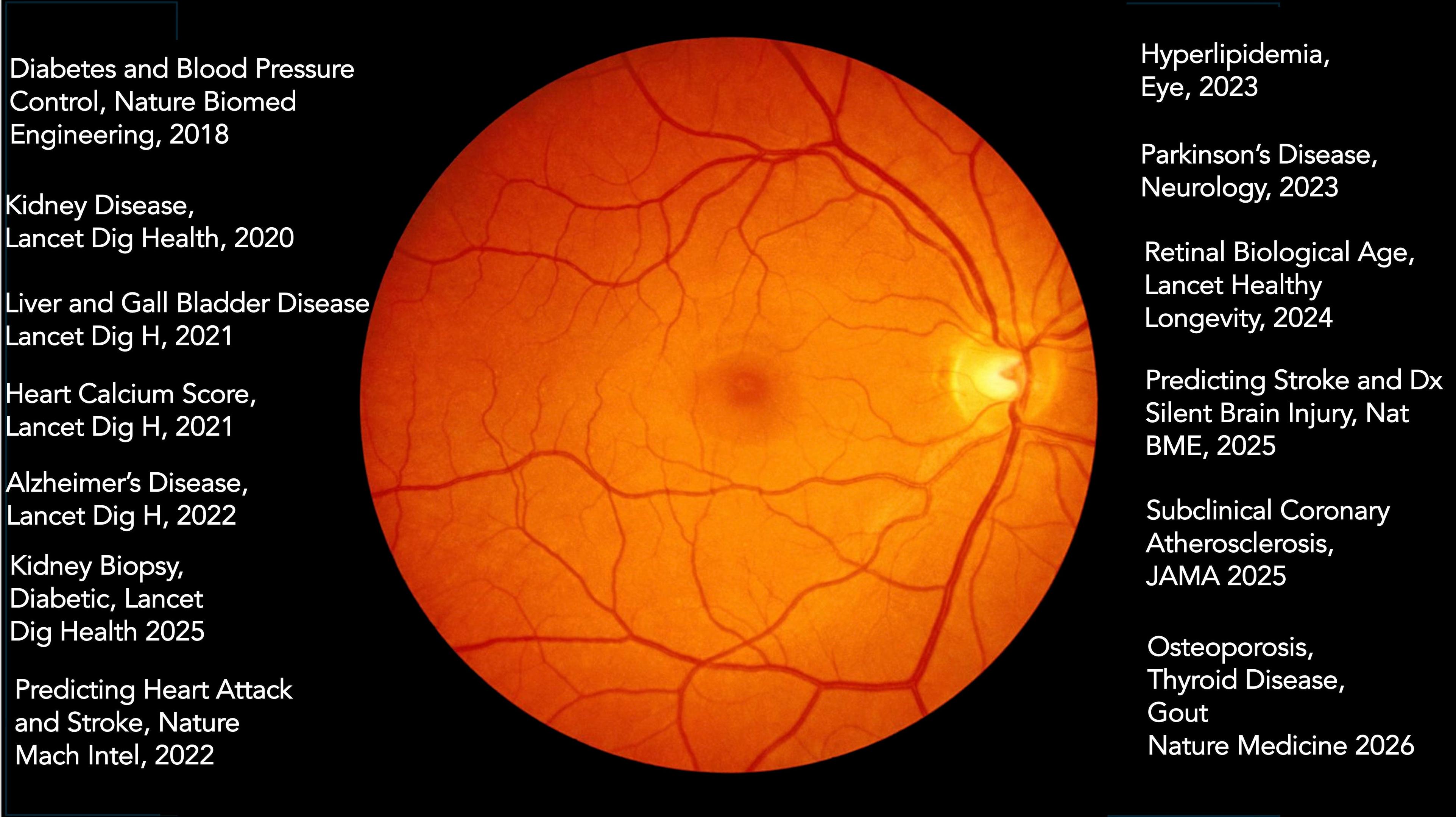
Need an example? In a recent analysis by Dr. Eric Topol on The Paradox of Medical AI Implementation, he highlights that a single image of the retina can be used by AI analysis to identify a vast array of medical conditions (with the publication and year of the discovery noted). And yet, he also notes a frustrating reality that little of these astounding medical advances have actually been implemented within the healthcare system - there's a vast gap between the promise and potential of AI, and the reality of its implementation.

And the fact is, this isn't restricted to healthcare - that gap exists across virtually every single industry. Everyone talks a great game with AI and goes on about its potential and disruptive reality - and yet very few are actually successful in using it to any extent.

Go back to the main point and dig deeper into his analysis - in his post, The Hidden Wealth of Medical Data, he shared that a single retina photo can reveal over 15 systemic medical conditions when processed by AI, yet it remains completely unadopted in routine clinical practice.

What's going wrong? He points out that we leave extensively validated technology on the shelf:The fact is, the image above shows us that over a decade of research has given us "superhuman vision" in medical imaging. Think about it - one picture of an eye can detect things like Parkinson’s, Alzheimer's, kidney disease, and heart disease, for a very small cost. Few are using this capability. It doesn't stop there - an AI analysis of a colonoscopy consistently outperforms gastroenterologists in detecting polyps across 44 randomized trial. Tools like China's PANDA AI can catch aggressive pancreatic cancer on standard CT scans up to three years ahead of a radiologist. Yet, due to fragmented healthcare infrastructure and broken business models - as well as a vast education gap - these tools are virtually absent from standard medical practice.

The takeaway? Innovation is exciting, but integration is where the value lives.

True progress isn't just about getting excited about AI and talking about its potential; - it's about having the discipline to implement the deep, data-driven solutions that are already proven to work.

Sadly, from what I am seeing, this seems to be the common case across every industry, from agriculture to manufacturing, insurance to energy. Everyone is talking a brave game - but few are showing up.

So today, ask yourself this: are you focusing on AI's potential, or are you doing the hard work of building it into your daily infrastructure?

Read the full deep-dive by Dr. Eric Topol: erictopol.substack.com/p/the-p.

★ 1 • ↻ 0 original
May 28, 2026 · 9:33 AM UTC

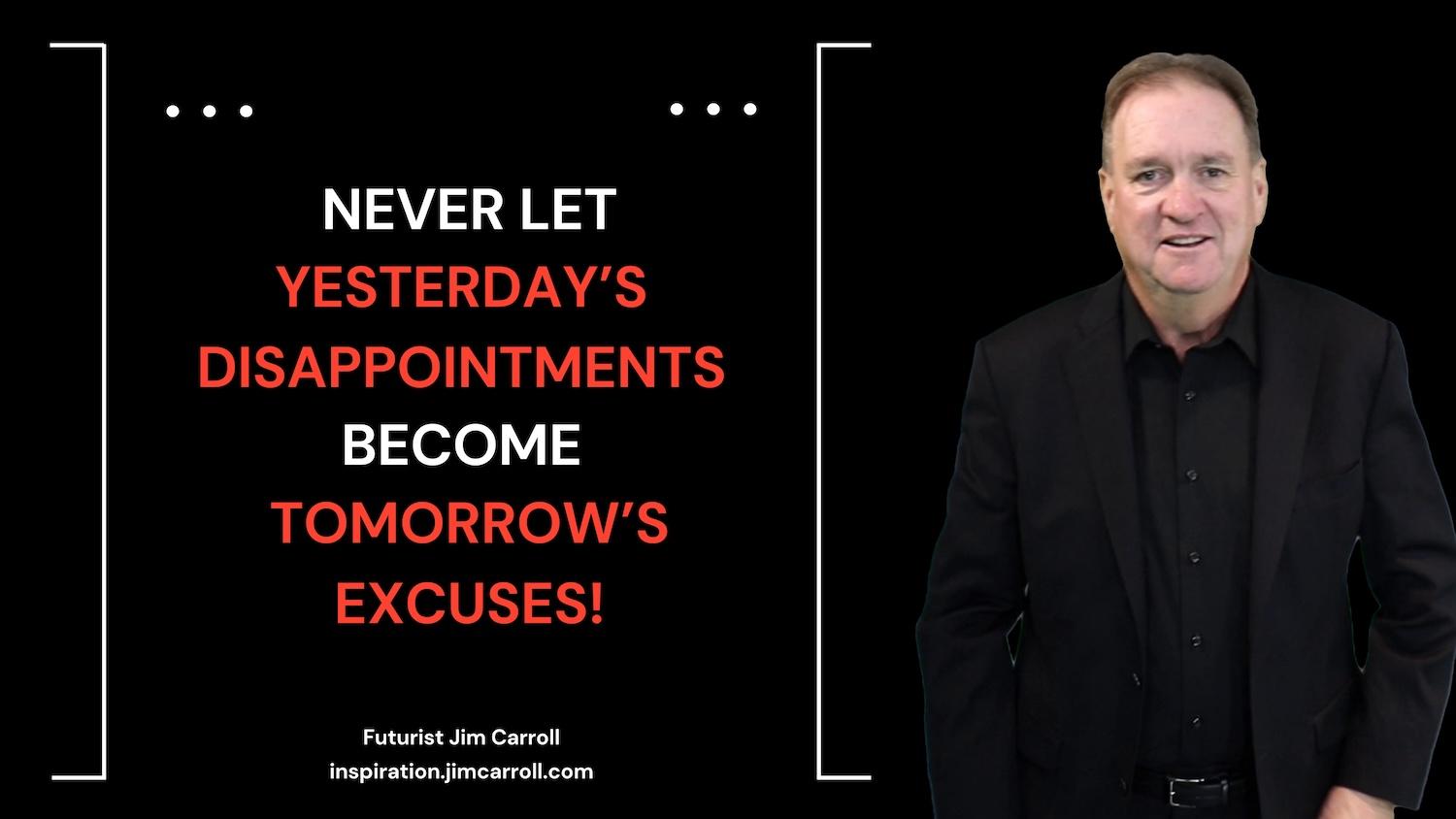
"Never let yesterday's disappointments tomorrow's excuses!" - Futurist Jim Carroll

It is agonizingly easy to hunker down when life throws you a curveball.

After all, we are naturally wired to look for a dry place to hide, waiting for the storms of volatility or personal setbacks to pass.

But building a bunker out of past failures is a losing strategy. When you allow yesterday’s disruptions to dictate today's inaction, you aren't playing it safe.

You are actively choosing to let the past define your future potential.

The most important moments in your life and career are not the problems that slow you down, but how fast you choose to move once you get back on track. Disappointment is just a tough lesson that gives you the experience you need for the future.

Instead of letting a bad break stop you from moving forward, use it as an opportunity to build your strength! Stop making excuses, stop delaying, and start doing!

---

Futurist Jim Carroll often points out how disappointing results often leads to future opportunities.

Original post: jimcarroll.com/2026/05/daily-i

★ 1 • ↻ 0 original
May 29, 2026 · 9:53 AM UTC

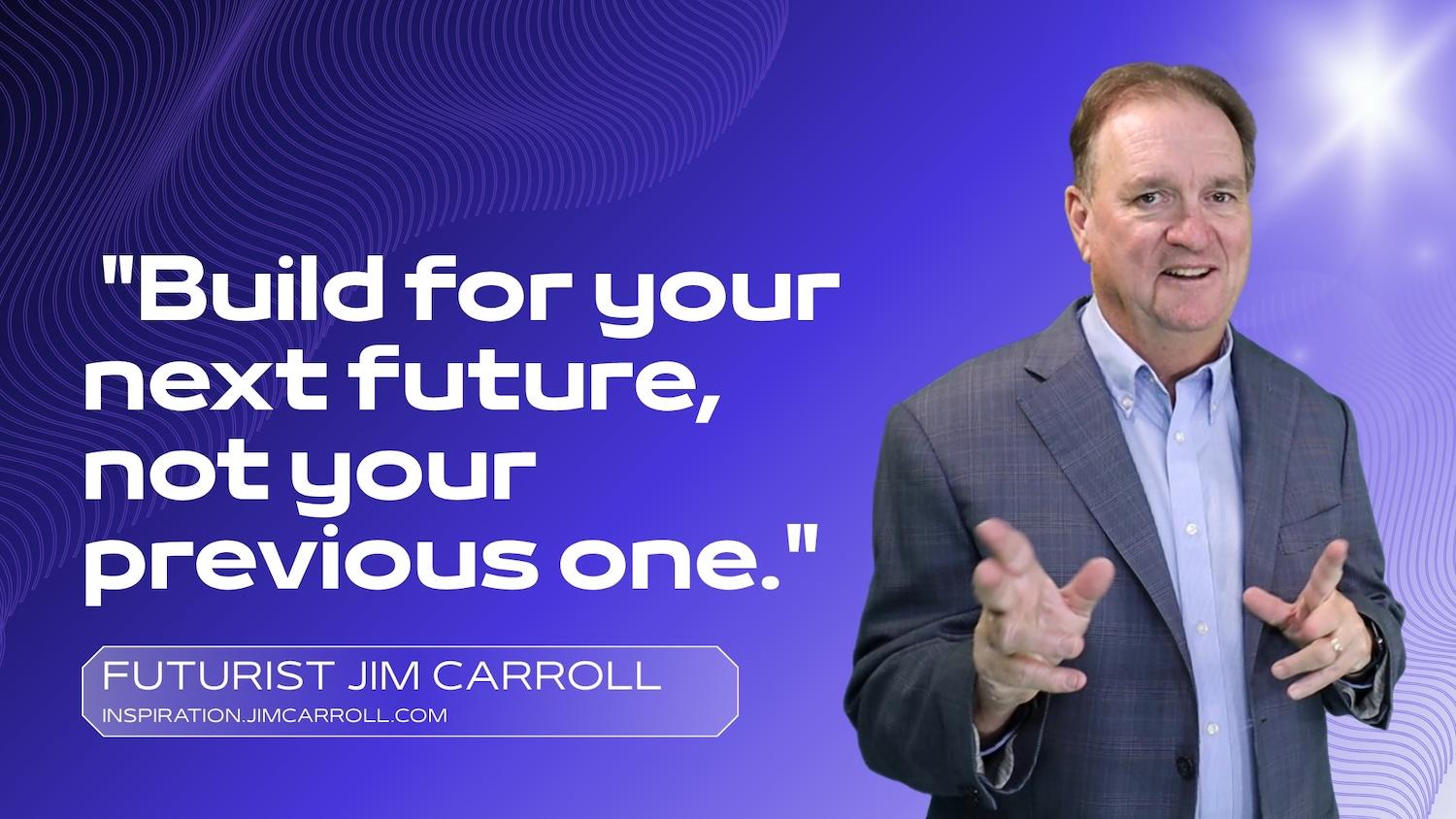
"Build for your next future, not your previous one." - Futurist Jim Carroll

Here's a thought for Friday: there's no benefit to trying to do new things for old things that have already been done. Think about that in the context of this idea: far too many people waste their energy trying to fix or protect a world that no longer exists.

They want the past to come back, just rearranged.

But the future doesn't negotiate with your nostalgia. It doesn't have patience for the 'olden days.' It hates it when you say 'the way things were.'

It only knows where it's going, and that's forward.

Are you?

★ 1 • ↻ 0 original
← April 2026June 2026 →