Futurist Jim Carroll

Mastodon post archive · 2022–2026
Archived from mastodon.futurist.info · 4209 posts
← All months

April 2025 · 35 posts

← March 2025May 2025 →
Apr 1, 2025 · 10:12 AM UTC

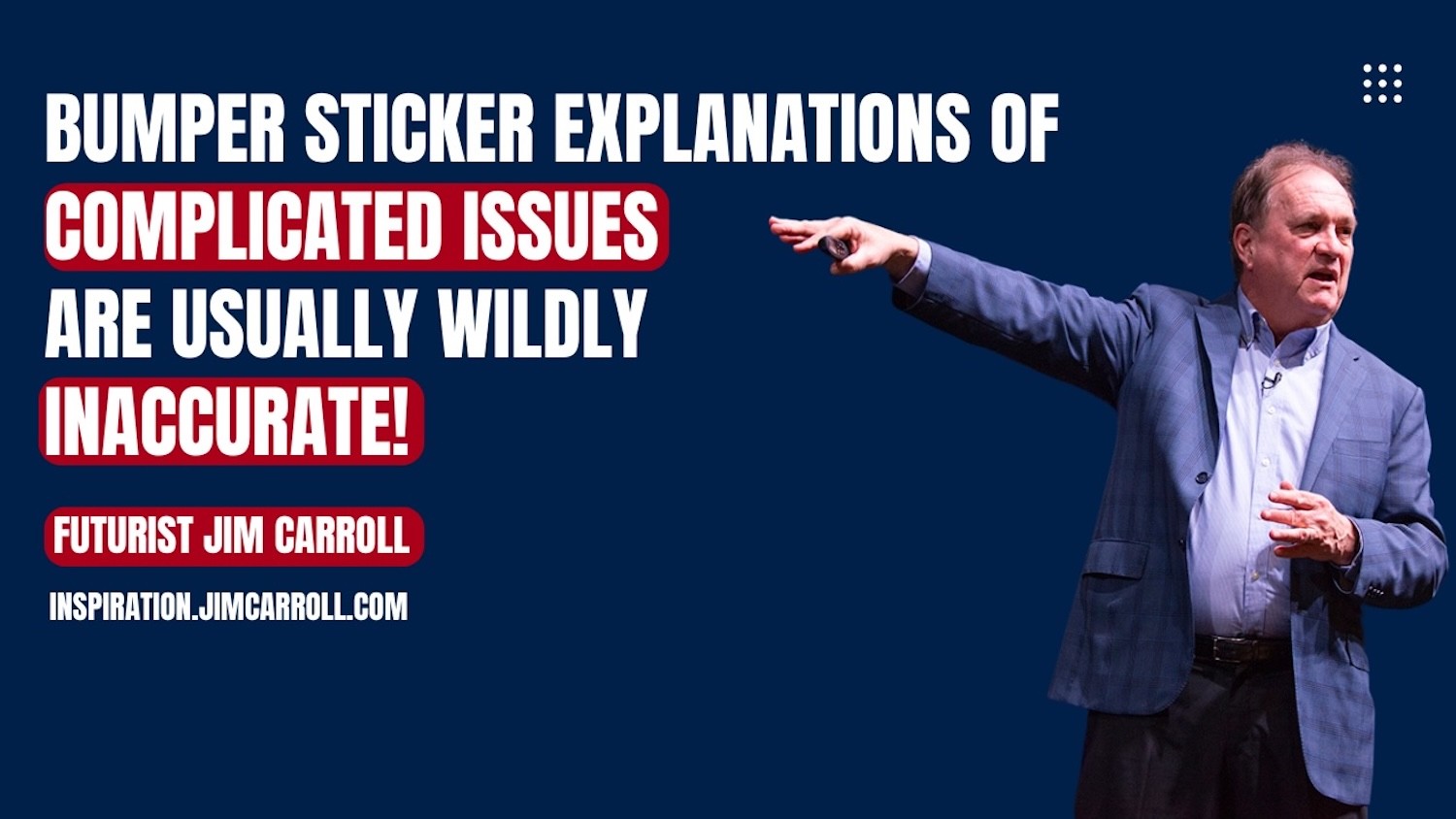
"Bumper sticker explanations of complicated issues are usually wildly inaccurate!" - Futurist Jim Carroll

There are a lot of people with instant insight on everything and yet who are experts at nothing.

Isn't that the way it goes?

If you spend any time talking with anyone today, it would seem that they are suddenly experts on tariffs and their impact on regional, national, and local economies. Everyone is offering up concise statements of what it means, where it will go, and what will happen. I prefer to listen to global trade experts and economists - folks who are trained in this stuff. In the same way, I'd rather listen to a PhD in vaccine medicine than some quack who gets his information off an obscure conspiracy theorist's Website.

That's why ideas like "trickle-down economics will work" statements are always such a false promise. The notion that tax cuts for the wealthy and corporations automatically benefit everyone has been repeatedly challenged by economic research showing limited "trickle-down" effects and increasing wealth inequality. And yet the bumper sticker wisdom lives on.

Why does this happen?

"Bumper sticker" phrases - catchy one-liners about complex issues - sacrifice accuracy for memorability. They fail to address the multiple perspectives, historical context, systemic factors, competing values, and technical details that complex problems involve. They often aren't based on much more than opinions.

The fact is, oversimplifying leads to:

- Overlooking cause-effect complexities

- Creating false either/or scenarios

- Substituting emotion for analysis

- Reinforcing existing beliefs

Good leaders know when simplicity works and when issues demand a deeper explanation. They engage with complexity and guide others through it thoughtfully. They also know that while bumper-sticker wisdom can be popular, it causes more problems than good.

Ironically, my statement about bumper stickers is itself a bumper sticker - though one that points out its limitations!

Perhaps we need simple reminders to look beyond simplicity.
**** **** **** **** **** **** **** **** **** ****

Futurist Jim Carroll is willing to admit that perhaps many of his Daily Inspiration posts contain bumper-sticker wisdom. He lives and owns the contradiction.
Original post: jimcarroll.com/2025/04/decodin

★ 2 • ↻ 1 original
Apr 2, 2025 · 9:55 AM UTC

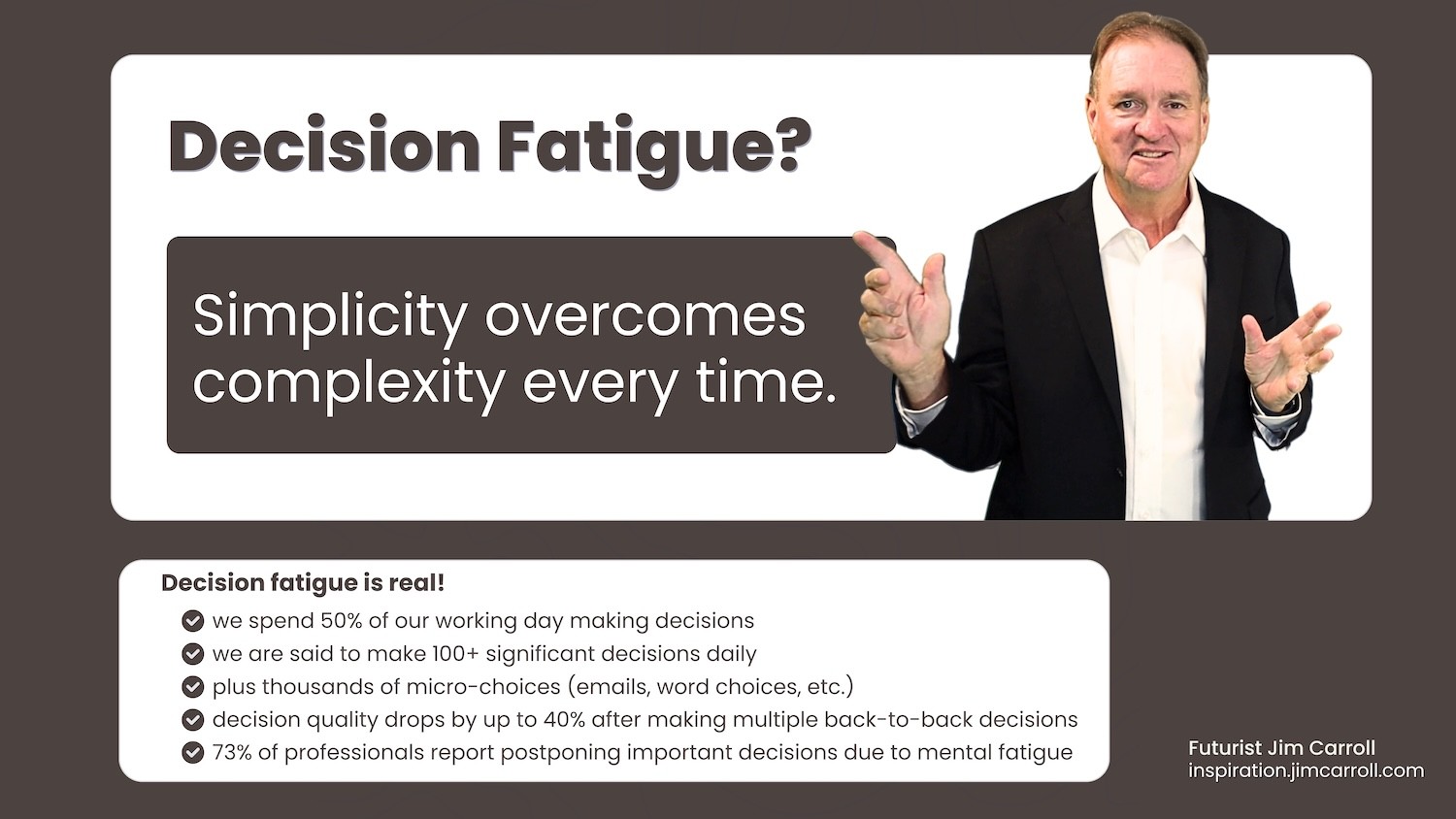
"Decision fatigue? Simplicity overcomes complexity every time" - Futurist Jim Carroll

A shoutout to Christa Haberstock for giving me the idea!

----

Each month, I do an email blast to the various speaker bureau folks who have booked me through the years - about 260 people at this point,.

With that being the case, I've come to keep my message - a key way of keeping them up to date - shorter and to the point..

Here's what I sent yesterday. It speaks for itself with powerful guidance that can apply to just about anything.

---

Decision fatigue is real. Breaking through is what matters!

Let's talk about why clients can't make up their minds in 2025!

Noticed clients taking forever to pick speakers lately? It's not you - it's decision fatigue!

I remember seeing a post somewhere on LinkedIn recently that something like 1.5 million people have either 'speaker' or 'keynote speaker' in their profile - no wonder clients are feeling overwhelmed.

This is making it difficult for them to select a speaker - and this is combined with the decision fatigue they are already facing.

Decision Fatigue? What's that?

In my 30+ years of speaking about leadership and innovation, I've often shared insights with audiences about the issues people have with making decisions. Here's what I know - simply put, our brains get tired after making too many choices. Each decision uses mental energy, and eventually, we run out of gas. When we run out of gas, we do the easiest thing possible - we stop making decisions.

Recent studies highlight just how real this problem is:

One study suggests we spend 50% of our working day making decisions

- We make 100+ significant decisions daily, plus thousands of micro-choices (emails, word choices, etc.)

- Decision quality drops by up to 40% after making multiple back-to-back decisions

- 73% of professionals report postponing important decisions due to mental fatigue

I've also noticed that decision paralysis becomes significantly worse during periods of volatility.

Back in 2002, I identified what was happening in the meetings and events industry as what I called "aggressive indecision" - people simply refusing to commit to anything due to overwhelming uncertainty.

I think that's where we are at right now.

By the time they're looking at your speaker options, they've already made too many decisions that day. Their brain is basically saying, "Not another choice!"

No wonder they ghost you after initially seeming excited!

They make the decision easy by deferring it, avoiding it, and not thinking about it.

Here's how to make it easier for mentally drained clients - make it easy for them to make decisions.

Original post: jimcarroll.com/2025/04/decodin

★ 2 • ↻ 1 original
Apr 2, 2025 · 5:17 PM UTC

Embrace and escape!

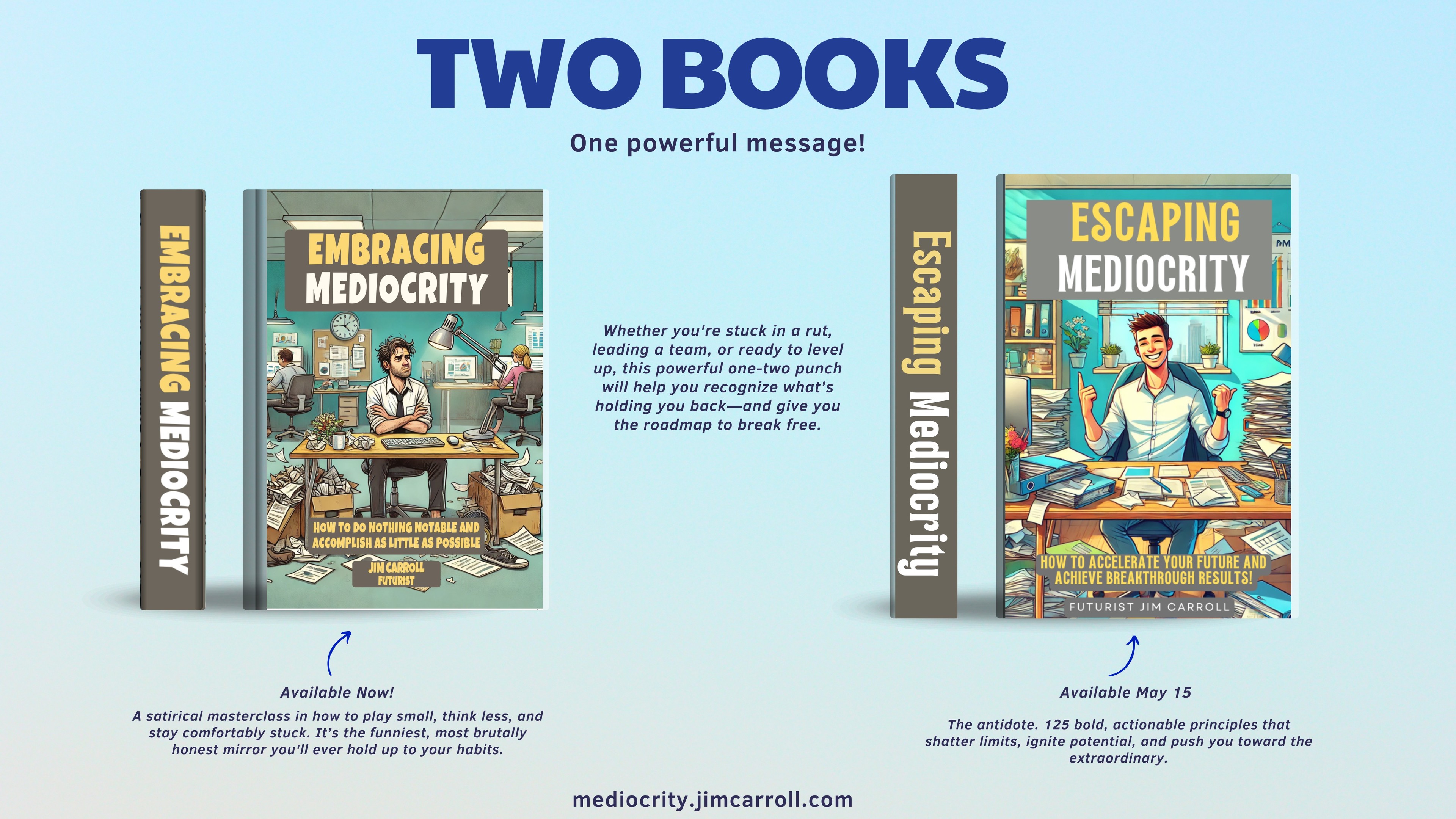
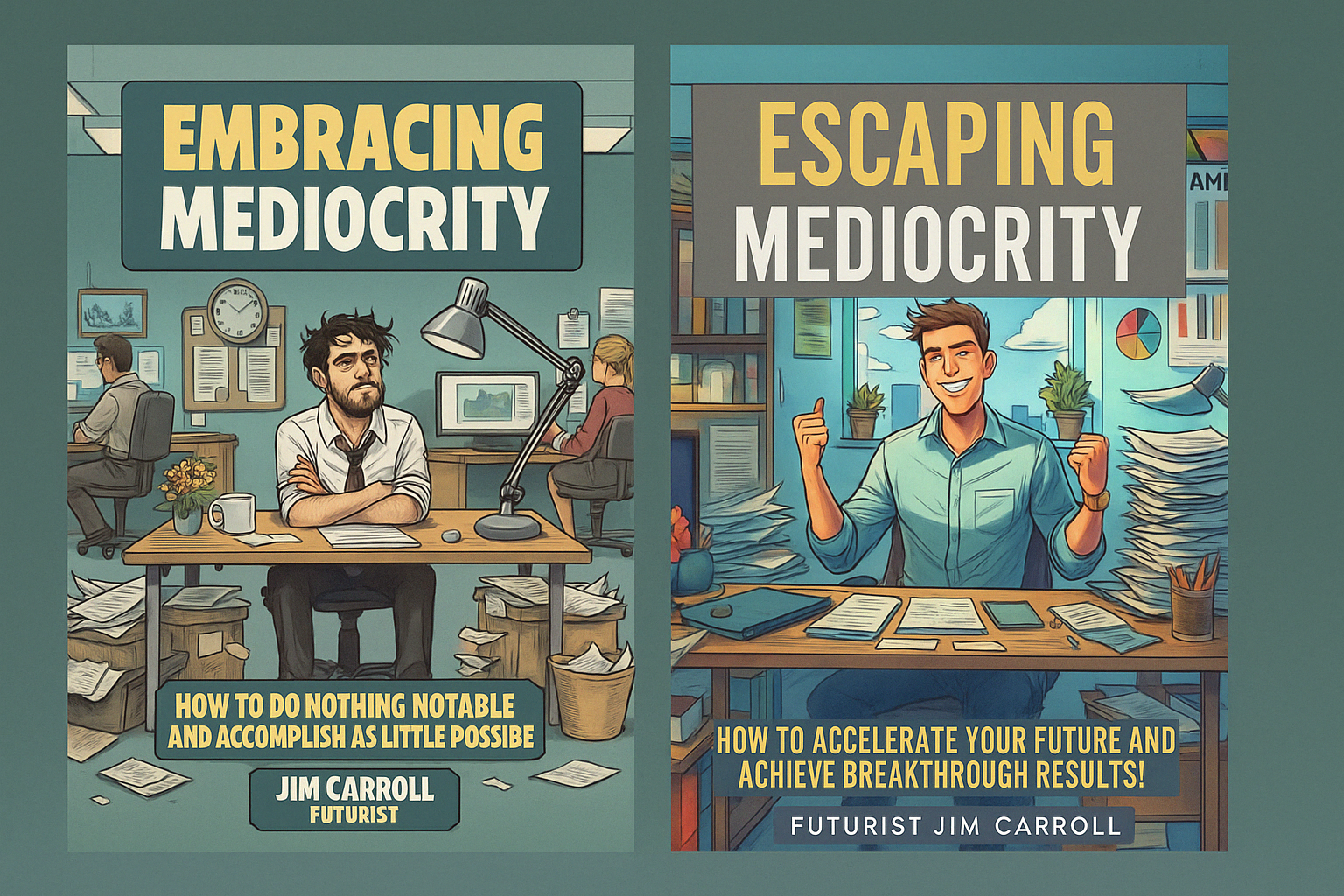
I've never had more fun writing my 41st and 42nd books! I tackle what I've seen in 30 years of examining innovation success and innovation failure, and have wrapped them into two concise overviews that go hand in hand.

Today, I'm getting images together for Escaping Mediocrity, arriving by May 15, while watching sales for Embracing Mediocrity, which is already in print.

Two books. One powerful message!

Get yours - learn more!

**** **** **** **** **** **** **** **** **** **** **** **** **** **** **** **** **** **** **** ****

mediocrity.jimcarroll.com

★ 0 • ↻ 0 original
Apr 2, 2025 · 5:50 PM UTC

AITA?

★ 1 • ↻ 1 original
Apr 2, 2025 · 8:46 PM UTC
★ 43 • ↻ 23 original
Apr 3, 2025 · 10:51 AM UTC

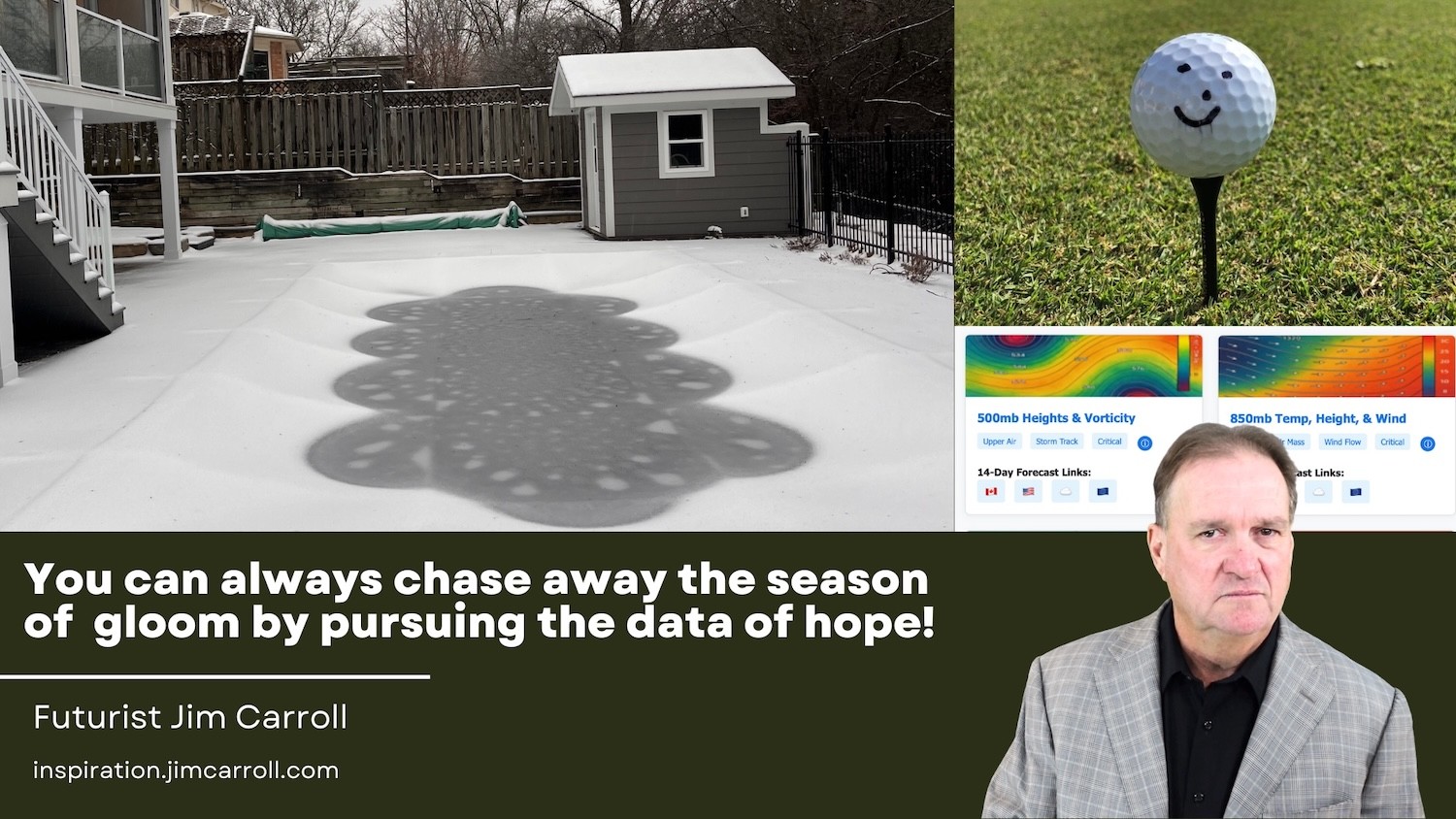
"You can always chase away the season of gloom by pursuing the data of hope!" - Futurist Jim Carroll

So let's talk about what I call the 'season of gloom' and the new phrase that is sweeping the tech and AI world, 'vibe coding.'

It turns out that I'm in the midst of the former and have been doing the latter.

The 'season of gloom?' That's what I call this period between the end of ski season and the start of golf. Some folks call it other things, and some are not fit for sharing. According to one chart, yesterday we were in the midst of our third winter.

Yesterday, we had a massive little mini-blizzard, ice pellets, freezing rain, rain - and then just now, overnight, some pretty massive thunderstorms. Golf can't start soon enough! I try to manage my despair by opening my pool in just over a week for a quick swim.

I also try to keep my optimism for spring in check by following various long-range weather forecasts to try to get a sense of when we might emerge from the gloom. I have, for many years, been trying to teach myself to understand these long-range weather patterns by studying various weather model forecast maps. To do that this year, I've been doing a bit of 'vibe coding' - I just created my nifty new long-range weather page which I built using AI. You can visit it at weather.beingoblio.com/longran

This little page lets me access various long-range weather models, to get a sense of what might be happening with the weather 10 to 14 days out. There's not a lot of consistency in weather predictions that far out, but this can be used to get a sense of where there is some agreement and where might find ourselves in terms of the jet stream, temperature patterns, high and low-pressure systems, and more. (Click the little 'i' icon and you can get a description of each map.)
I'm using it to try to chase away the gloom, by understanding what the weather might look like two weeks out - hence, today's quote.
I'm waiting for a real spring vibe to kick in.

I'm still waiting.

But there is hope.

Fore!

Original post: jimcarroll.com/2025/04/decodin

★ 0 • ↻ 0 original
Apr 4, 2025 · 10:02 AM UTC

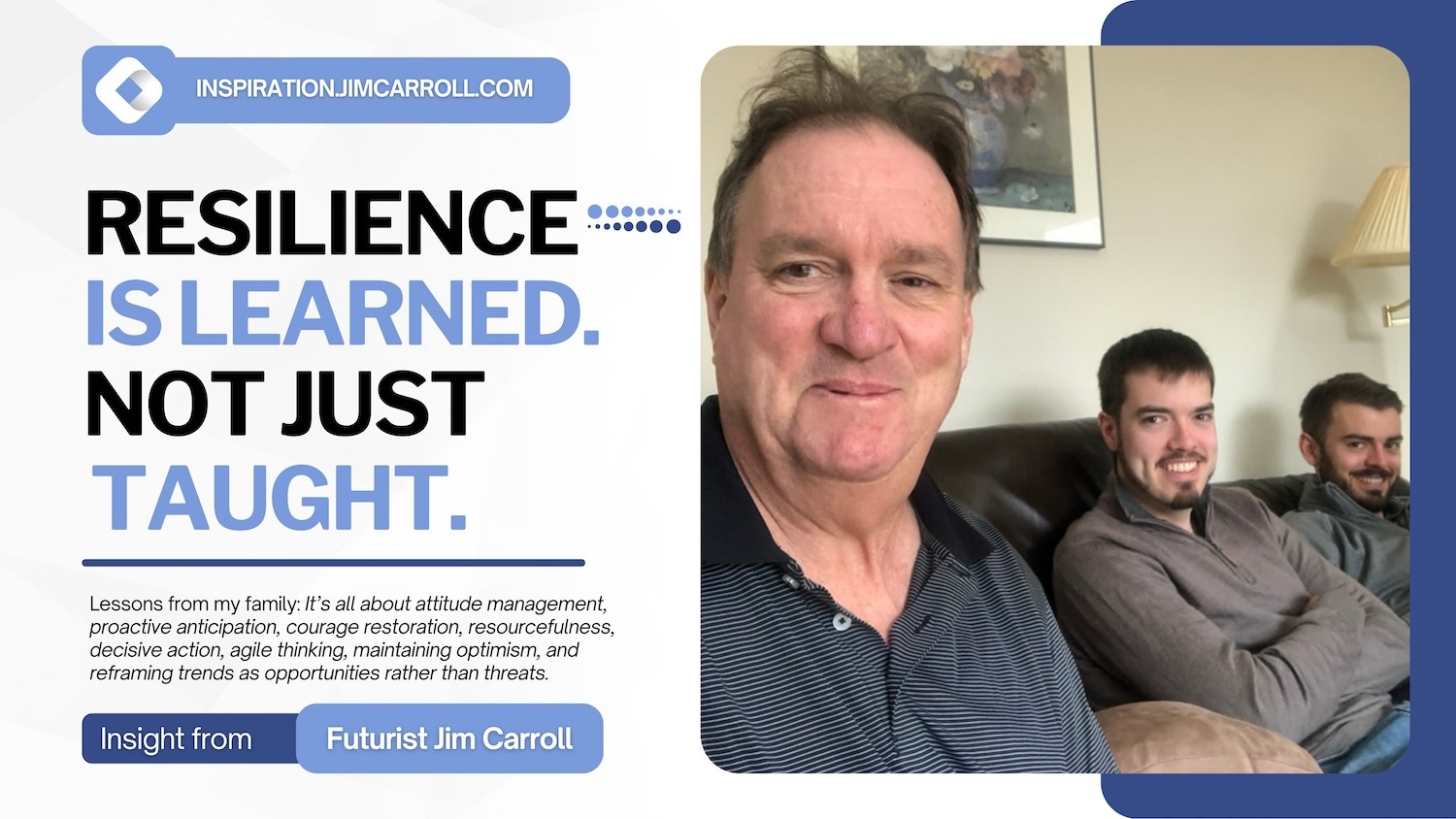
"Resilience is learned. Not just taught" - Futurist Jim Carroll

Lessons from my family: It's all about attitude management, proactive anticipation, courage restoration, resourcefulness, decisive action, agile thinking, maintaining optimism, and reframing trends as opportunities rather than threats.

I have so much to learn from my sons and daughters-in-law!

I'm reflecting on this today as the youngest of my two sons turns 30. Here's on the far right in the photo.

While I spend a lot of time on a lot of stages speaking about resilience, I've had the opportunity to witness the development of resilience firsthand with the evolution of their careers and lives.

Each of them has faced some type of significant career challenge at some point in their lives. Rather than giving into despair, I've watched as they've nurtured themselves with hope, determination, and action. The spirit they've shown through these times has taught me something about myself and has offered me lessons on how I too can nurture my spirit of resilience.

Here's what I've seen - as their careers underwent the typical - and sometimes untypical - twists and turns of life, they never gave up. They never gave in. They fought back. In doing so, they become the fountain of wisdom that has helped to nurture my soul, feed my optimism, and fuel my determination. When I talk about resilience in my keynotes, I often draw from global business examples.

But today, I want to share something more personal - how my sons and daughters-in-law have embodied the resilience principles I've advocated for years.

Here's what I've learned.

**** **** **** **** **** **** **** **** **** ****

Original post: jimcarroll.com/2025/04/decodin

★ 1 • ↻ 1 original
Apr 4, 2025 · 6:58 PM UTC
★ 95 • ↻ 49 original
Apr 7, 2025 · 10:06 AM UTC

"The long arc of the future always rewards the resilient!" - Futurist Jim Carroll

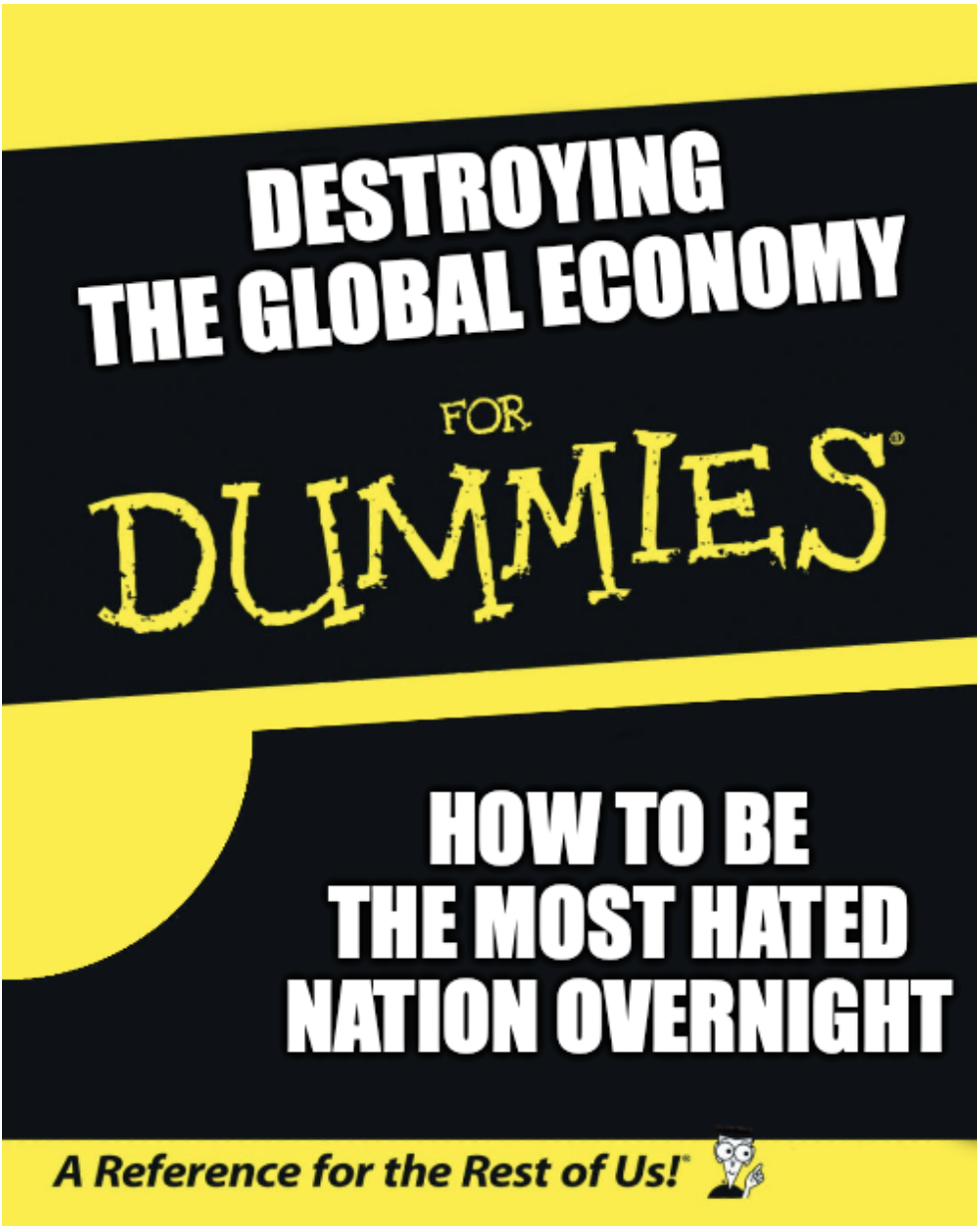
It is what it is. We are where we are. This moment in 2025 feels like a bad dream to many, and the assault on the global economy was a tipping point for many worldwide. With that in mind, I'm devoting the next few weeks of my Daily Inspiration to addressing a key question: How do we lead through uncertainty. How do we lead ourselves - what's our mindset? How do we lead others - how can we help? How do we lead our organizations - how do we keep moving forward? I spent a lot of time on this theme during and after the downturns of 2001, 2008 and again during 2020. There is a lot to revisit, and a lot to think about. The theme is 'resilience,' and we can all learn more about. 

We’re living through an era where it feels like the very idea of progress is under siege.

Science is questioned. Facts are ignored. Bold ideas are met with backlash. Funding is cut. In parts of the world—especially in the U.S.—there’s a growing, dangerous desire to rewind the clock. It’s an effort to return to some imaginary "better time," rather than confronting the future with the courage and creativity it demands.

And yet—despite it all—the future hasn’t stopped moving forward.

You can delay progress. You can defund it. You can deny it. You can hammer it with ill-advised or even idiotic decisions.But you can’t delete it.

Never forget that fact, and act accordingly.

Don't give in. Don't give up. Don't give way.

The long arc of innovation always bends forward. History is clear on this: the future always finds a way.

It’s tempting, especially now, to be disillusioned. To believe the cynics are winning. To think progress is on pause. It's easy to let fear strike us every day, stunning us into frozen disbelief.

But don’t confuse noise for momentum. The future doesn’t follow headlines. It follows courage, capital, and conviction. And all three are still alive and well—albeit a bit battered and bruised. But they are still there.
As a futurist, I’ve always said the future belongs to those who are fast. But today, I’d add this: it also belongs to those who refuse to flinch.

If some people want to step back from the future—that’s their choice.

You? Step forward. The future is still yours— ours— to build.

----

Futurist Jim Carroll gets up every morning, checking the headlines, seeking the answer to the same question. You know what it is.

**** **** **** **** **** **** **** **** **** ****

Original post: jimcarroll.com/2025/04/decodin

★ 3 • ↻ 2 original
Apr 8, 2025 · 9:46 AM UTC

"In times of chaos and fear, purposeful action is power" - Futurist Jim Carroll

Act boldly. Fear feeds on hesitation.

Think about this moment. Confidence is fragile. Every headline screams volatility.

And just like that, a wave of fear rolls in—bringing hesitation, doubt, and paralysis.

Are you letting the fear freeze your future?

Have you become the deer in the headlights?

But here’s the truth: the antidote to anxiety is action.
While others freeze, you can move.

While some debate what might go wrong, you can start building what could go right.

While people wait for signs an upturn, you can create your own little upturn, simply by acting.

Fear loves hesitation. It grows stronger when you pause, wait, scroll endlessly, or convince yourself that “now isn’t the time.” It thrives in your indecision, matures in the recesses of your uncertainty, and becomes a cancer in your inaction.
But bold action—no matter how small—immediately puts you back in the driver’s seat. It shifts your mindset from 'overwhelmed' to 'engaged.' It puts you in control. It gets you out of your doom cycle. It brings you back from focusing on where you are - to building momentum for where you could be.

You don’t have to launch a moonshot to make a difference. You don't need some huge stretch goal. You don't need to be chasing some grand vision. You just have to move:
Learn something new.

Start that project.

Test the idea.

Build the prototype.

Say yes.

Momentum beats perfection. Progress quiets panic. Action beats fear.
We are not victims of the future. We are its architects—if we choose to be.

So when the uncertainty rises, meet it with motion.

When fear whispers “not yet,” answer back: “Watch me.”

Because the future doesn’t wait.

And neither should you.

What are you waiting for?

----
Futurist Jim Carroll knows that action is the antitode to every moment of volatility.

These posts on resilience and volatility are also being archived at tomorrow.jimcarroll.com

**** **** **** **** **** **** **** **** **** ****

Original post: jimcarroll.com/2025/04/decodin

★ 0 • ↻ 1 original
Apr 9, 2025 · 9:36 AM UTC

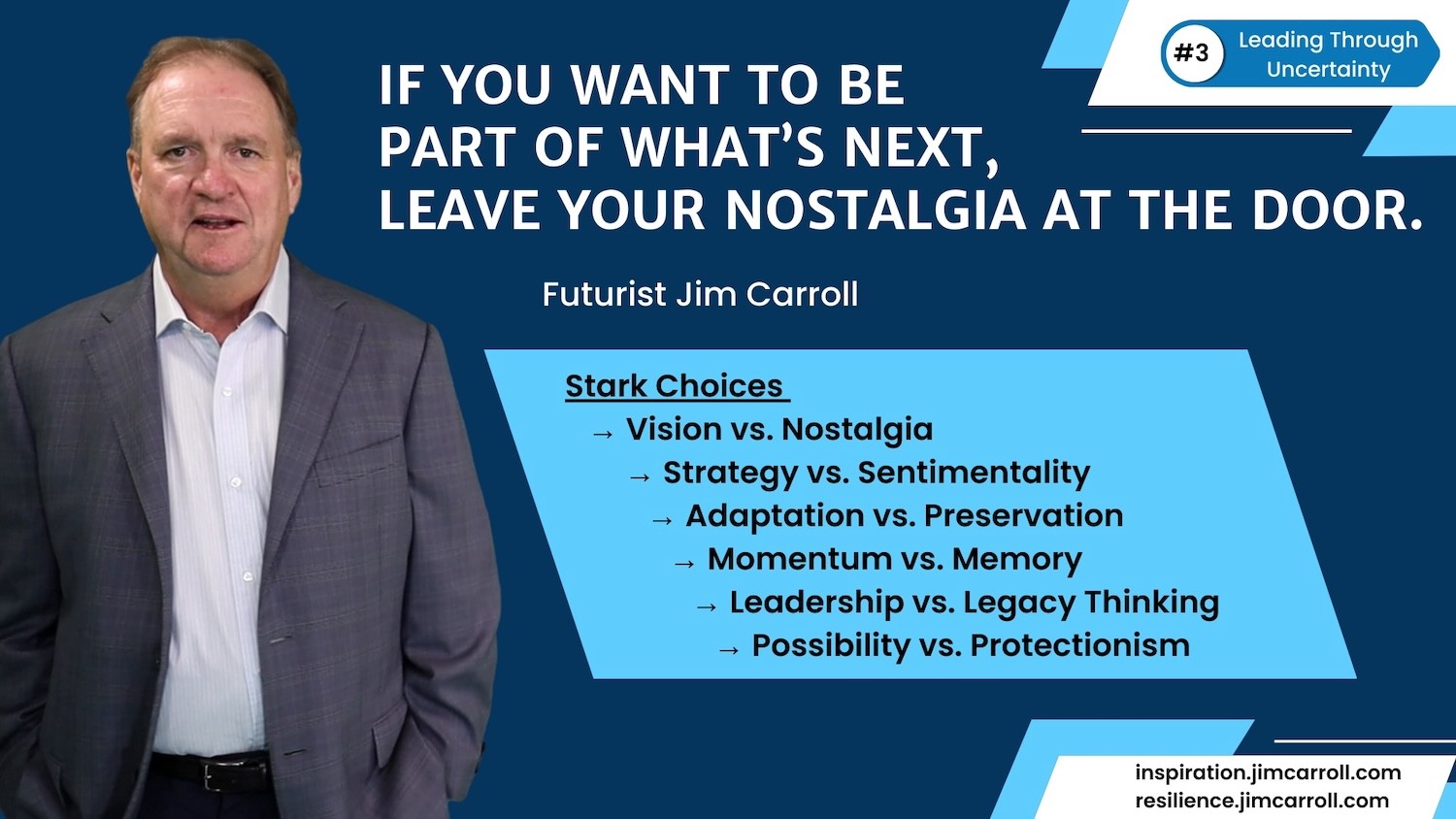
“If you want to be part of what’s next, leave your nostalgia at the door" - Futurist Jim Carroll

You need to commit.

Yesterday, or tomorrow?

I know where I'm going. It's in my job description.

Think about it - at this very moment, we’re witnessing a battle playing out everywhere—across boardrooms, governments, industries, at parties and sports events and family get togethers. The battle is being  driven by a vainglorious and ill-fated desire to try to take things back to where they were - not to where they are going.

And one of the most important things you need. to do is make your decision - and stick to it - as to where you are headed.

It's a battle of vision vs. nostalgia.

Of strategy vs. sentimentality.

Of building what’s next vs. longing for what was.

It's really not a fair fight.

We’ve reached a point where the familiar is failing - old industries are dying, old skills are becoming irrelevant,  old knowledge is going out of date, old jobs are disappearing. In the context of that? New industries, skills, knowledge, jobs - and new opportunities.

It's called disruptive change, and it is very real. The new rule is that older stable ideas aren’t stable. Playbooks that were once reliable aren’t playable. Assumptions and strategies that served the past no longer serve the future. The fact is, the world’s moving faster than our old systems were designed to handle.

And yet—some still cling to the comfort of past success like it’s a security blanket.

But nostalgia is not a strategy. It’s a sedative.

Recessions and disruptions are not the time to shrink your ambition.

They’re a time to reshape it.

So ask yourself: Are you holding onto what used to work—or reaching for what could?

The future doesn’t wait for comfort.

It rewards courage.

Original post: jimcarroll.com/2025/04/decodin

★ 1 • ↻ 0 original
Apr 9, 2025 · 9:43 AM UTC

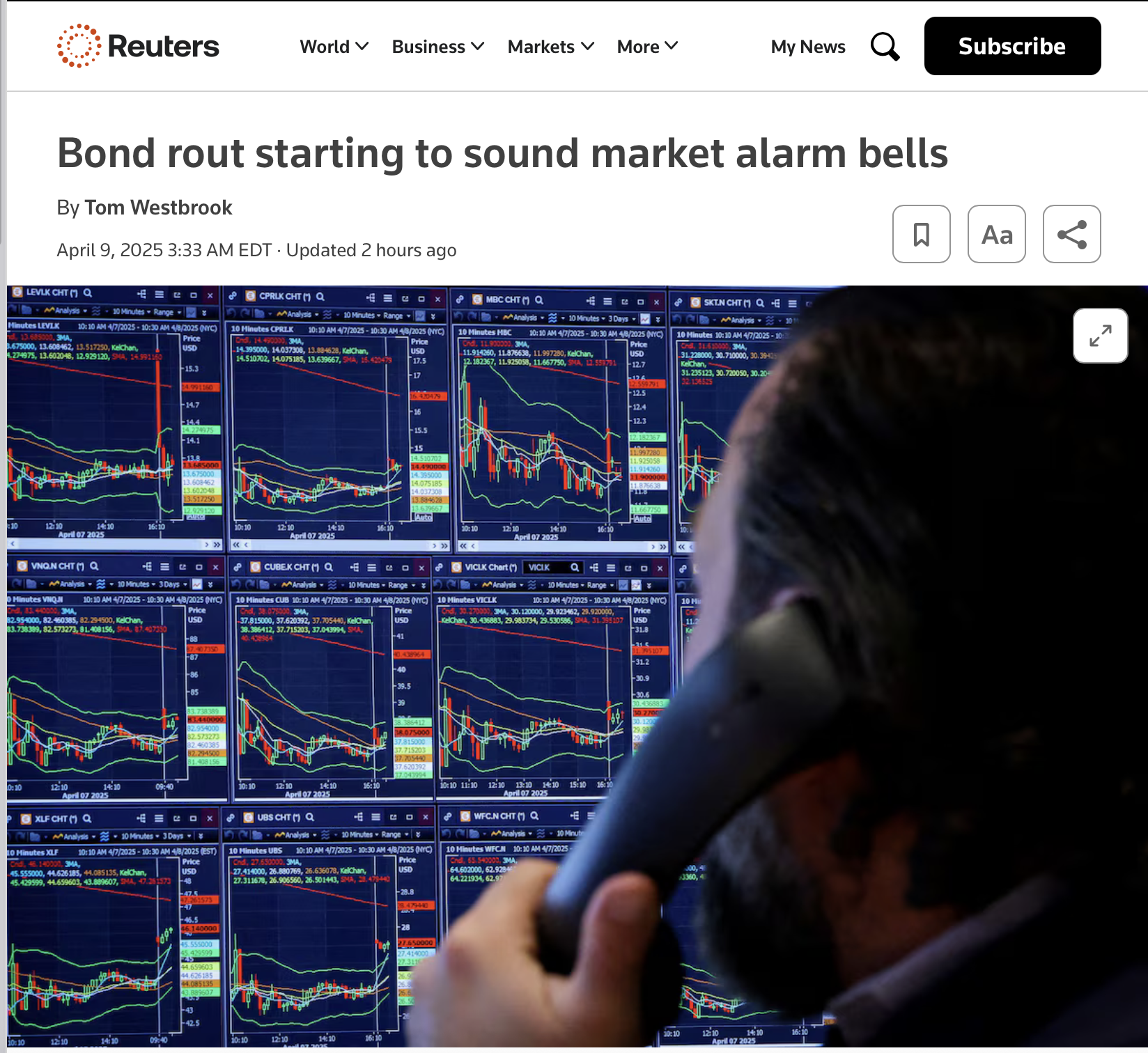
This will be the subject of movies and documentaries in years to come.

You can be dead certain that Central Banks around the world are in high-level emergency calls today, trying to find a way out.

Want to get into the vibe? 

Go watch Margin Call (2011)

youtube.com/watch?v=IjZ-ke1kJrA

★ 1 • ↻ 5 original
Apr 9, 2025 · 12:46 PM UTC

We are here.

★ 2 • ↻ 0 original
Apr 10, 2025 · 10:25 AM UTC

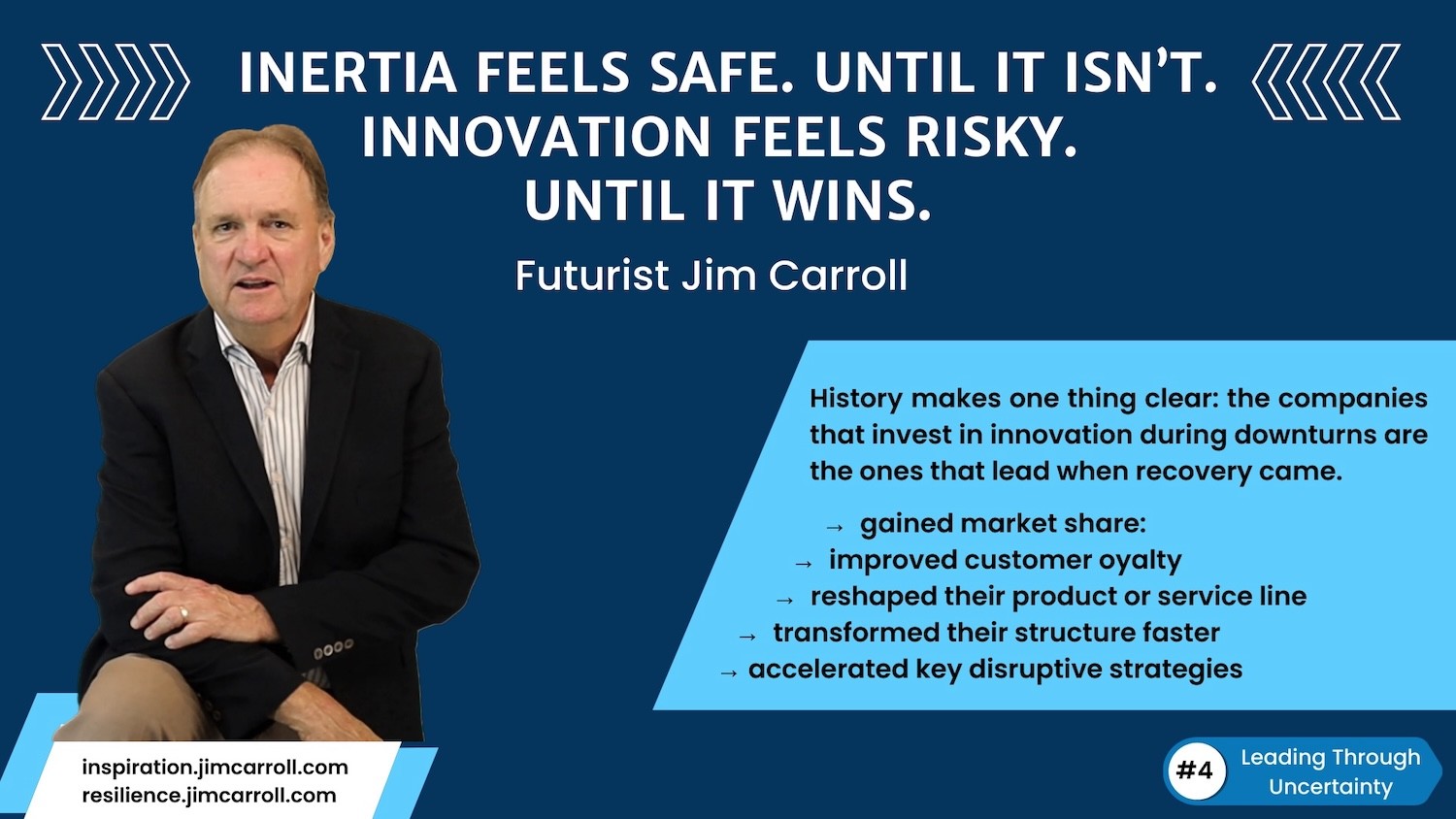
"Inertia feels safe. Until it isn’t. Innovation feels risky. Until it wins." - Futurist Jim Carroll

Uncertainty rewards the inventive, not the indifferent.

Recessions test everything—strategy, structure, and above all, mindset.

You are going through all that right now with the wild whiplash of this moment in time. You can't easily define strategies straight in a world in which one moment the world is up and the next is down. You can't figure out a path forward when the path keeps changing. You can't plant a flag on a foundation of certainty where there is none.

But what you can do is commit to investing in your future through innovation.

Think about it - when the world turns volatile, most companies do the typical thing - they freeze. They cut everything. Delay everything. Protect what was. Go into a mode of delay. But others take a different route: they innovate—not recklessly, but intentionally. They adapt their offerings, reframe their markets, and lean into change.

History tells us who wins.

In past downturns, the most resilient companies continued to invest in R&D, product development, and digital transformation, even as they restructured costs elsewhere. They embraced frugal innovation—creating smarter, leaner, more relevant solutions with limited resources. They used the moment to reimagine offerings for evolving customer needs.

They didn’t innovate in spite of the crisis. They innovated because of it.

These companies weren’t reckless. They were strategic.

They used volatility as a forcing function to rethink how they deliver value—and to whom.

And the results speak for themselves - they:

- captured market share: Outpaced competitors by staying relevant during volatility.

- deepened customer loyalty: Met changing needs with smarter, faster solutions.

- reimagined offerings: Pivoted products and services to fit the moment.

- streamlined structures: Transformed operations to move with greater speed.

- accelerated disruption: Fast-tracked innovation that would’ve taken years otherwise.

Meanwhile, those that chose inertia? Most never caught up. Because innovation isn’t a luxury for good times. It’s a necessity for what comes next.

In the end, volatility favors those willing to reinvent—while inertia quietly takes the rest out of the game.

Which side of the curve will you be on?

---

Futurist Jim Carroll spoke on resilience and innovation in uncertainty at dozens of leadership meetings post ’01, again in ’08, and guided organizations again in ’20. He’s developed a comprehensive overview of how to move forward, not back, during an era of uncertainty. It’s being shared here and documented at tomorrow.jimcarroll.com

**** **** **** **** **** **** **** **** **** ****

Original post: jimcarroll.com/2025/04/decodin

★ 0 • ↻ 1 original
Apr 11, 2025 · 10:02 AM UTC

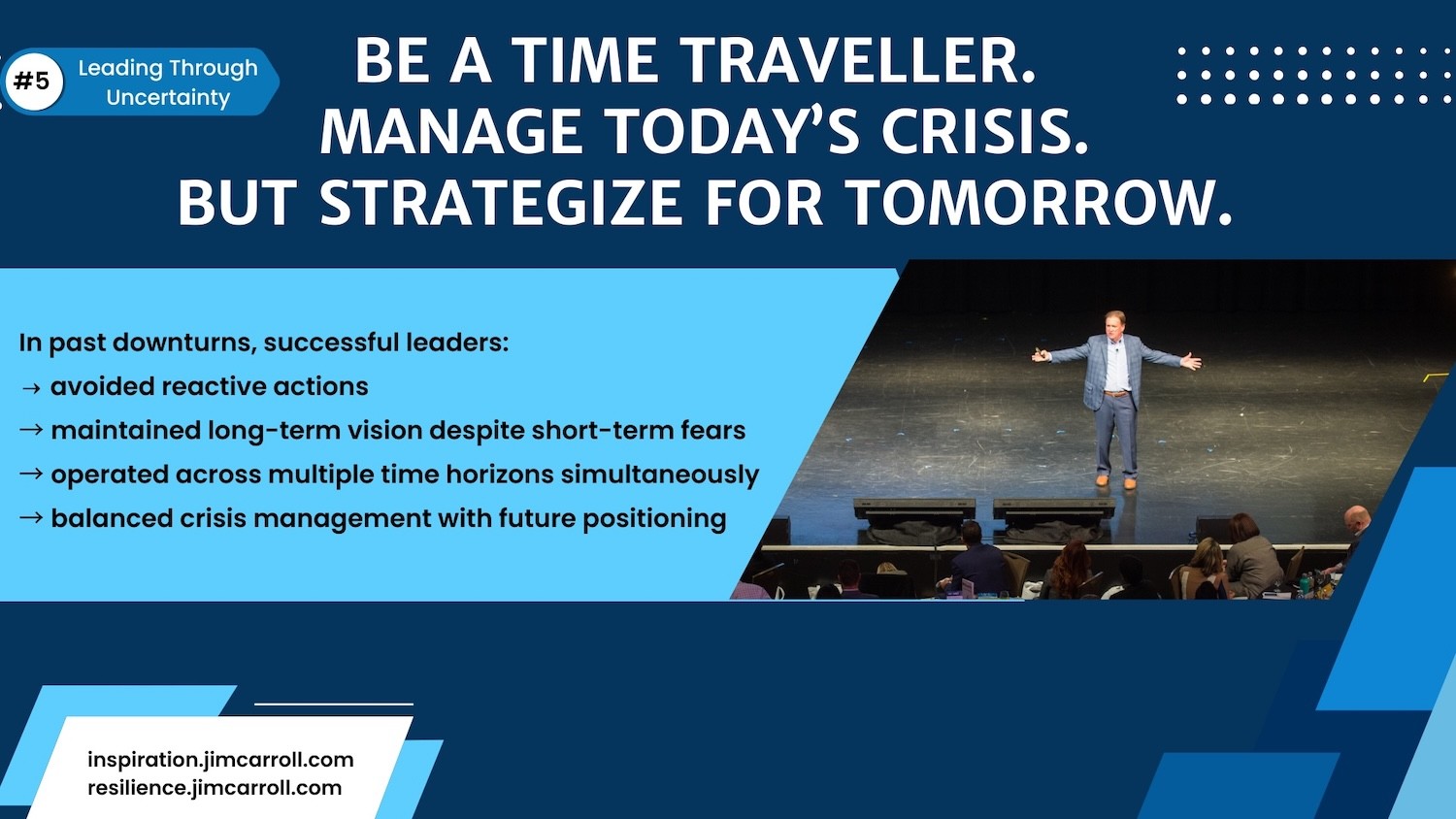
"Be a time traveller. Manage today's crisis. But strategize for tomorrow." - Futurist Jim Carroll

Downturns are not just economic events. They are stress tests for leadership.

When pressure builds, plans unravel. Priorities scatter. Noise takes over. People panic. That’s when some leaders retreat—shrinking their vision, delaying decisions, or hoping someone else will take the next step. But others stay grounded. They hold the line—for their teams, their strategy, and their purpose.

This is real resilience. Not slogans. Not survival But the ability to move across time—anchoring the present, while building for the future.

You have to be a time traveller: respond to the moment, while keeping your eyes locked on what comes next. Resilient leaders don’t just manage the current crisis —they hold it together until the future arrives.

Here’s what the data shows from past downturns:

- the most resilient organizations didn’t retreat into reactive cycles.
- they didn’t discard their long-term vision under short-term fear.
- they remained disciplined on costs and intentional on growth.
- they protected their people, their customers, and their momentum—not just their margins.

The fact is, while they managed the crisis in real time, they never lost sight of the bigger arc.

- they thought across multiple time horizons at once:
- they actively manage today.
- all while preparing for tomorrow.
- and positioning for the rebound that always comes.

They didn’t flinch. But they didn’t charge blindly either. They led with calm, communicated with transparency, and made decisions that reflected long-term confidence — not panic.

That’s the essence of future-ready leadership.

So as the pressure rises, the question is simple: Are you retreating—or reinforcing? Are you in one time zone or several?

Because the leaders who shape what’s next aren’t the ones with the boldest slogans. They’re the ones who stay clear, steady, and focused—while keeping one foot in the future.

Be a time traveller.

Manage the crisis.

But never stop building what’s next.

----

Futurist Jim Carroll is sharing his insight on resilience and leadership in this series. You can find the full archive, as it unfolds, at tomorrow.jimcarroll.com

**** **** **** **** **** **** **** **** **** ****

Original post: jimcarroll.com/2025/04/decodin

★ 0 • ↻ 0 original
Apr 11, 2025 · 11:02 AM UTC

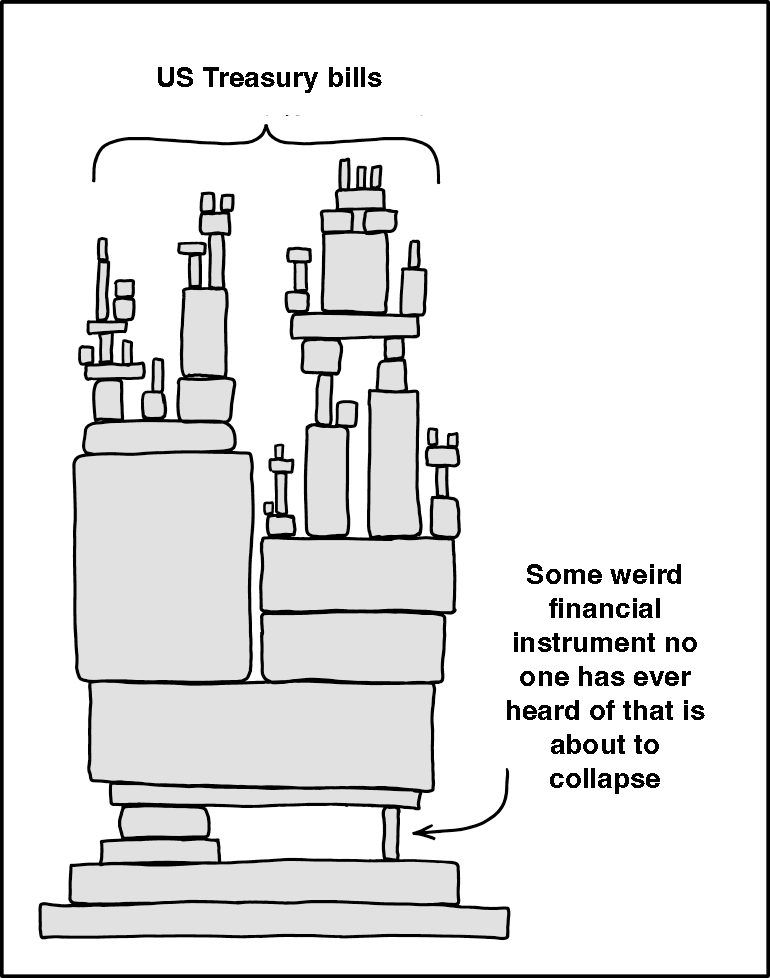
While everyone seems to be pausing with relief, keep this one simple fact in mind : The US is only one failed treasury bond sale from…

★ 1 • ↻ 2 original
Apr 11, 2025 · 5:09 PM UTC↩ reply

@steve I try not to post on politics, but its helpful to have some adults i the room.

★ 0 • ↻ 0 original
Apr 14, 2025 · 9:47 AM UTC

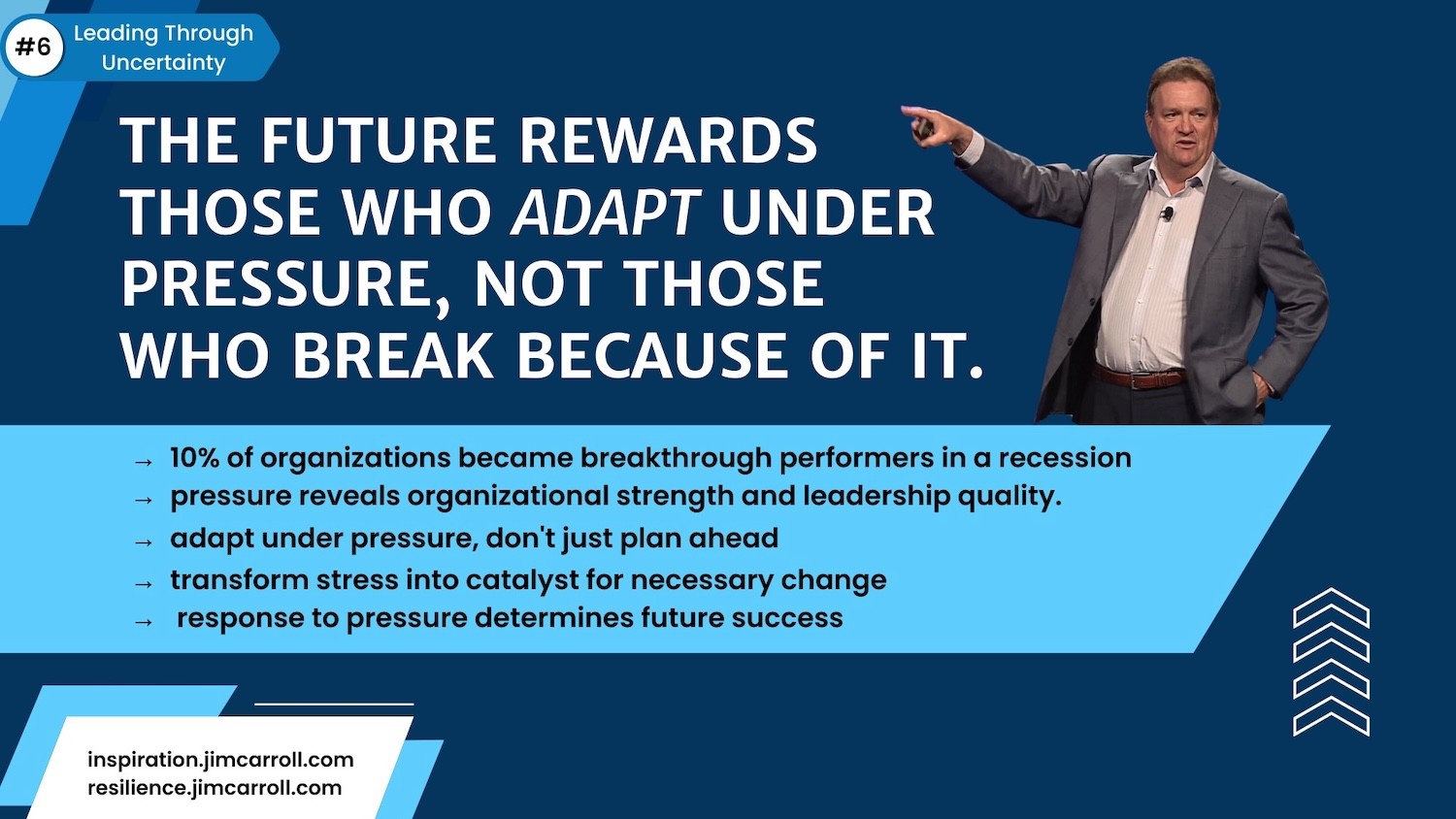
"The future rewards those who adapt under pressure, not those who break because of it" - Futurist Jim Carroll

Over the last five days, I’ve shared how we lead ourselves and our organizations through this moment of global volatility—one shaped by economic uncertainty, political instability, and cultural retreat from the future.

Beginning by reaffirming belief in progress, even when it feels stalled

Confronting fear with action

Challenging nostalgia with vision

Spotlighting innovation as the antidote to inertia

Emphasizing the importance of thinking across time horizons—managing today while preparing for tomorrow

But there's something deeper that sits underneath all of that: pressure..
That’s the real test—managing this moment. Keeping our heads on straight. Not letting the negativity consume us or define our future. If there’s one constant through every downturn, disruption, or crisis, it’s this: stress is the defining force of the moment. And how we respond to that stress—organizationally, personally, and strategically—determines whether we fall back, freeze up, or forge forward into what’s next.

That’s why today, it’s not just about planning for the future.

It’s about learning to adapt under pressure.

Every moment of disruption applies pressure. And pressure reveals everything. It reveals which organizations and individuals have foundations that flex, and which ones crumble. It reveals leaders who focus forward—and those who fold under volatility.

Right now, we’re not just navigating an economic downturn. We’re navigating a world defined by compounding stress—market stress, leadership stress, and system stress. But stress, when met with strategy, becomes fuel for the future.

I’ve written about this before: “It’s in our response to volatility that our future is defined.”

The most future-ready companies don’t panic. They channel pressure into progress. They don’t crumble under stress—they restructure, refocus, and realign. They transform pressure into precision—cutting noise, not capacity. They rethink agility, not just in structure but in mindset. They use stress as a forcing function—to do what needed doing all along.

My advice is clear: You don’t rebuild your organization for the next crisis. You rebuild during this one—for the world that follows.

Stress is unavoidable. But breaking is not.

**** **** **** **** **** **** **** **** **** ****

Original post: jimcarroll.com/2025/04/decodin

★ 2 • ↻ 3 original
Apr 15, 2025 · 10:13 AM UTC

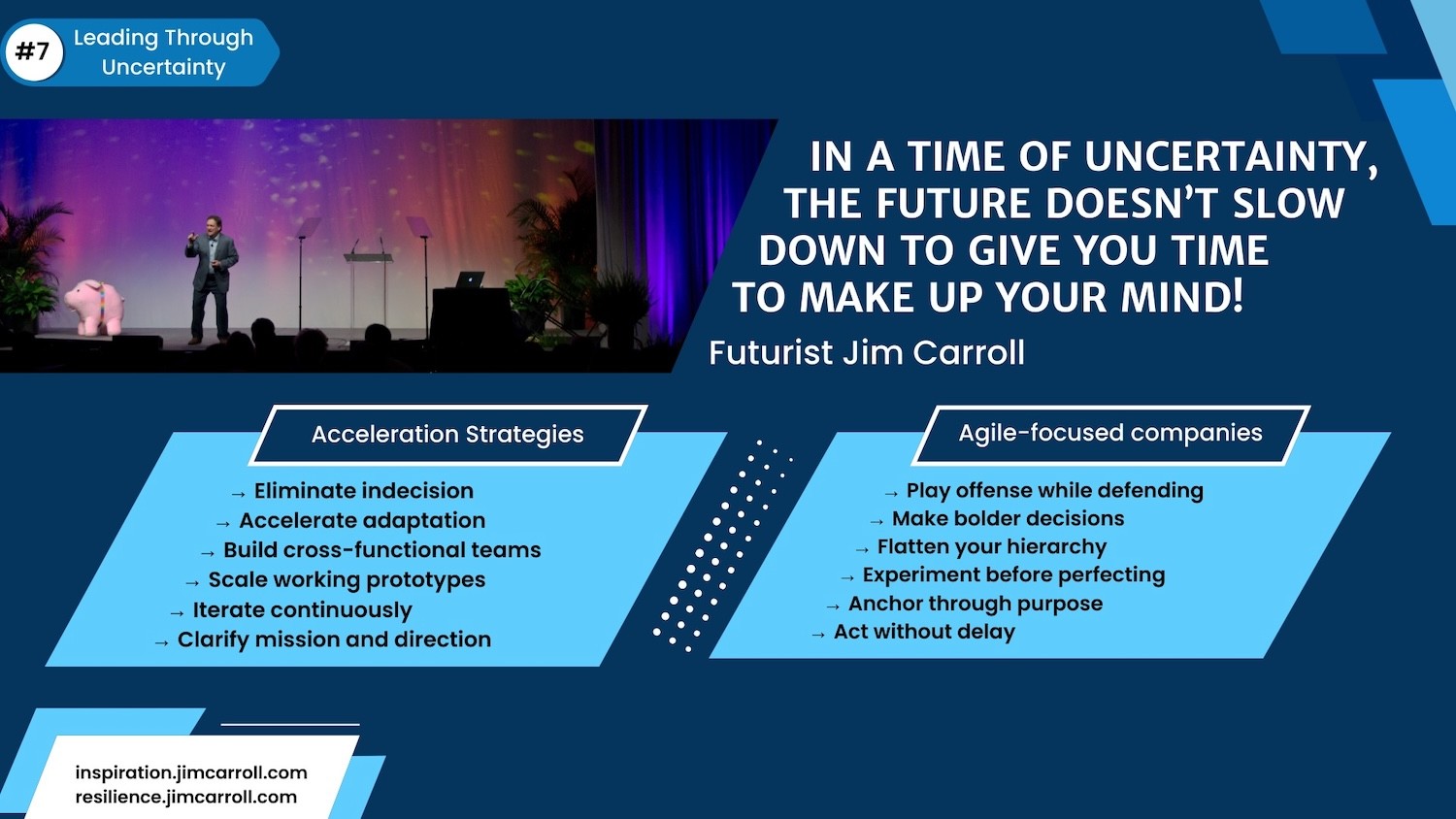
"In a time of uncertainty, the future doesn’t slow down to give you time to make up your mind!" - Futurist Jim Carroll

Uncertainty is not an excuse to stall. It’s a signal to move—strategically, swiftly, and with intent.

And yet, in moments like this, indecision becomes the silent killer. Leaders delay. Organizations drift. People pause, waiting for “clarity” that never comes. And in a moment in history that features relentlessly unpredictable - and some would say insane - levels of uncertainty, indecision becomes aggressive.

But the future doesn’t reward those who hesitate. It penalizes them, punishes them, and hurts them, by setting them further back. It rewards those who know how to pivot, adapt, and accelerate—even when the ground is shifting beneath them. I've said this before: “The biggest risk isn’t moving too fast—it’s moving too slow while the world speeds up.” That reality becomes more pronounced during an era of uncertainty.

In every previous downturn, we’ve seen the same pattern. The companies that acted with agility—who streamlined decision-making, shortened timelines, and empowered their teams—came out ahead. They didn’t rush blindly. But they didn’t wait for permission, either. They were bold, fast, and focused.

What did they do?

- they built cross-functional teams with the authority to decide in real-time.

- they prototyped quickly, then scaled what worked.

-they adopted an iteration mindset: test, learn, refine—then repeat.

- they aligned on mission clarity, so even in chaos, the direction was clear.

And that mindset isn’t just aspirational. It’s proven through research. I summed it up after the last crisis: “Bureaucracy is out. Speed is everything. The future belongs to those who can decide—and move.”

Here's the key thing to think about: agility isn’t recklessness. It’s responsiveness. It’s not about rushing blindly—it’s about having the confidence to move when others are still overanalyzing the map.
The greatest risk right now? It isn’t moving too fast. It’s moving too slowly while the world speeds up. And the greatest mistake? Doing nothing.

So as this new era of global uncertainty accelerates, are you still fine-tuning your plans while others are executing theirs?

Because the future isn’t waiting.

And neither should you.

**** **** **** **** **** **** **** **** **** ****

Original post: jimcarroll.com/2025/04/decodin

★ 0 • ↻ 0 original
Apr 16, 2025 · 9:45 AM UTC

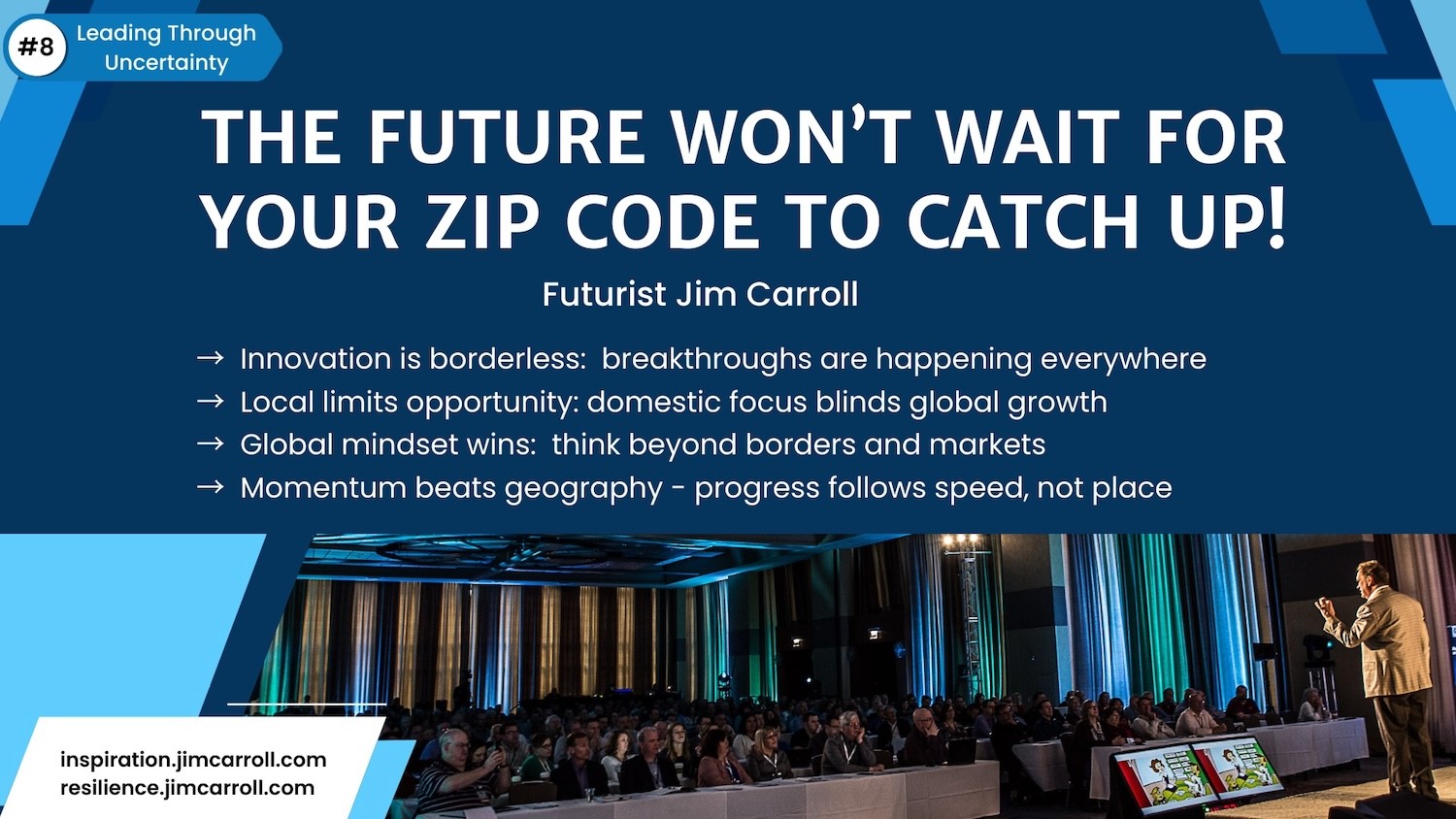
"The future won’t wait for your zip code to catch up! " - Futurist Jim Carroll

Yesterday I noted that the future won't slow down to wait for you to make a decision.

It also has little respect for those who try to avoid the reality that they are in a global economy.

When you step back and look around the world, something becomes crystal clear: The future is not unfolding in one place. It’s emerging everywhere—in labs in Ireland, factories in Vietnam, logistics hubs in the UAE, AI startups in Seoul, and solar grids in Morocco.

But while this global acceleration is happening, too many leaders and organizations are still thinking small. They’re stuck in a local mindset—tethered to domestic market opportunities, legacy business models, obsolete products or services, or outdated assumptions about where real progress comes from.

Here’s the reality: you can’t lead in tomorrow’s economy by thinking inside yesterday’s borders. I've said it before - the future doesn’t care about your region, your history, or your comfort zone. It flows to where the momentum lives. And that momentum is increasingly global.

- AI isn't just a Silicon Valley story—it's being industrialized in China, scaled in Europe, and accelerated in the United Arab Emirates

- the energy transition isn’t a North American trend —it’s becoming the default infrastructure in Scandinavia and the Middle East

- electric vehicles aren't some radical idea with a narrow future - it's becoming the dominant platform in China, Finland, and elsewhere
- advanced manufacturing isn't stuck in Detroit—it's transforming supply chains in Vietnam, Poland, and Mexico.

Meanwhile, companies that remain locally fixated are finding themselves cut off from opportunity—missing emerging markets, lagging on innovation, and getting blindsided by competitors they never saw coming. The world used to watch what happened in one or two countries to know where things were going. Now? You have to watch everywhere - because innovation doesn’t care about geography.

This reality is accelerating in the current economic and political volatility that defies 2025 - such that while one region tries to restore past glories, the rest of the world has decided to continue moving forward. Watch the latter - not the former - to figure out where tomorrow is now unfolding. 

Here’s what that means for your strategy:

- innovation is borderless.
- local thinking limits opportunity.
- a global mindset = competitive advantage.
- the future flows to momentum, not geography.

So ask yourself: Are you making decisions based on where the world once was? Or are you aligning with where it’s already going?

Because the future isn’t local anymore.

It’s global.

And it’s moving fast.

**** **** **** **** **** **** **** **** ****

Original post: jimcarroll.com/2025/04/decodin

★ 0 • ↻ 1 original
Apr 17, 2025 · 12:08 AM UTC

I spent a little bit of time redesigning my Mediocrity site.

Embracing Mediocrity is in print now.

Escaping Mediocrity is out by May 15.

Together, they're innovation and creativity kryptonite!

Have a look. Consider buying one!

mediocrity.jimcarroll.com

★ 1 • ↻ 2 original
Apr 17, 2025 · 8:48 AM UTC

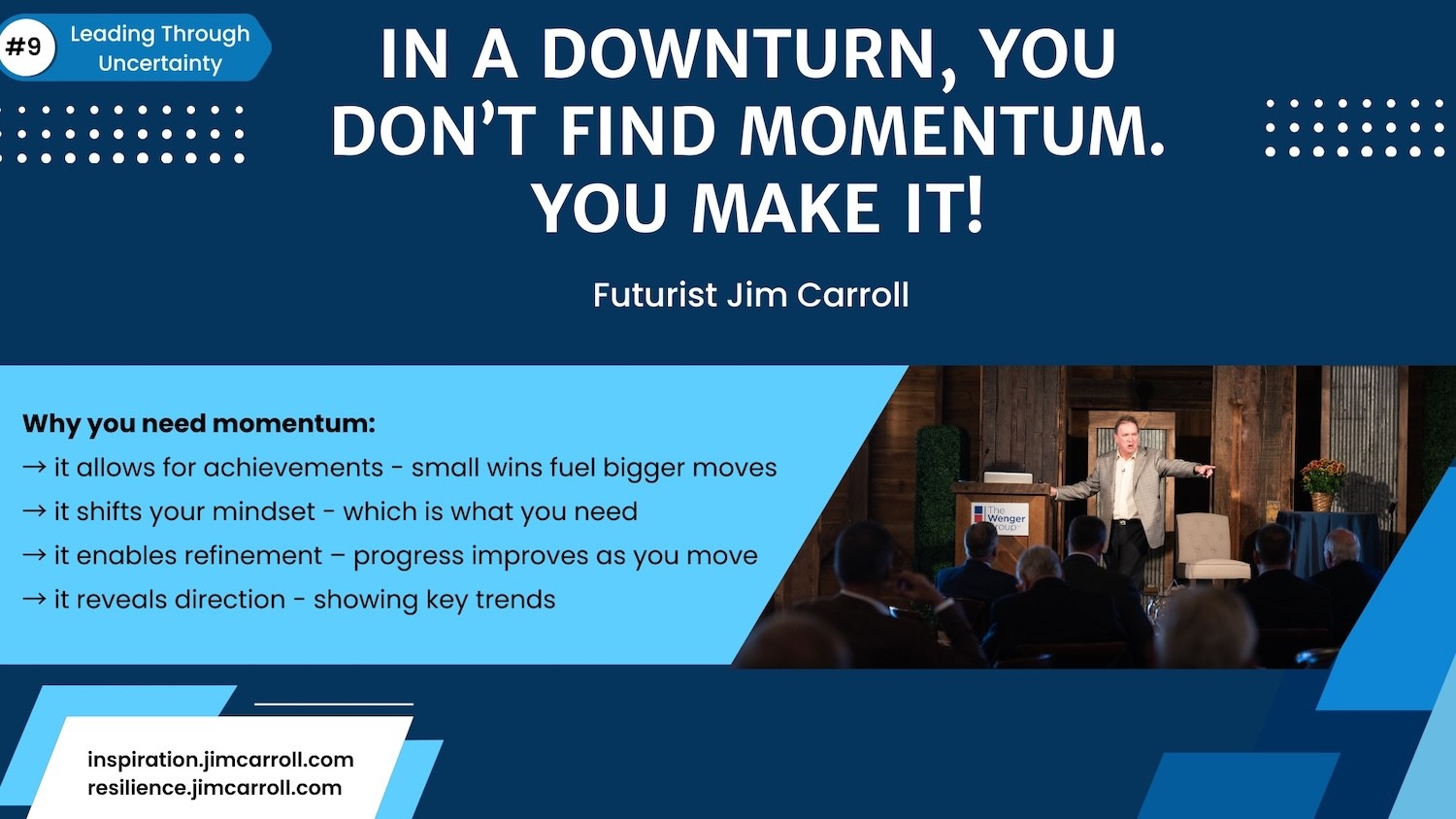
"In a downturn, you don’t find momentum. You make it!" - Futurist Jim Carroll

In a time of volatility, uncertainty, and a lack of clarity, the most natural reaction is often the worst one: we do nothing.

We pause. We overthink. We wait for something to settle before we make a move. 

We seek clarity and wait.

We end up waiting a long time - because the irony of this is that clarity doesn’t come from waiting—it comes from moving.

That's the real secret to getting through this volatile time.

Over the past eight posts, we’ve explored what it takes to lead into the future when everything feels unstable: replacing fear with action, and nostalgia with vision. Challenging inertia through innovation, and stress through strategic resilience.  Leading with agility over indecision, and thinking globally, not locally. Things like that.

But none of that matters if momentum is missing. Because without motion and moving forward, there is no forward.

That's why you need to imprint this idea in your mind. “You don’t find momentum. You make it.” The future doesn’t reward the ones who paused the longest. It rewards the ones who moved—even just a little—when no one else was.

And here's a secret you should know - progress isn’t always dramatic.

Sometimes it’s quiet, compounding, and invisible to everyone except those who kept showing up. Let me be blunt  - inaction is a decision. And it’s usually the wrong one. When volatility strikes, many leaders freeze - the exact wrong thing to do. But the organizations that keep moving build momentum that outlasts the downturn.

Why do you need momentum, even if you don't know where you are going?

→ It allows for achievements – small wins fuel bigger moves
→ It shifts your mindset – which is what you need
→ It enables refinement – progress improves as you move
→ It reveals direction – showing key trends

The key isn’t to make a massive leap. It’s to take the first step—and then another. And another. Soon you are walking into tomorrow - and then running.

You are already well into the race to the future, while the rest haven't even figured out where the starting line is.

---

Futurist Jim Carroll is already well into the Acceptance stage of the 7 Stages of Economic Grief because he knows that it is the only sure way to deal with the relentless uncertainty that already defines 2025.

Original post: jimcarroll.com/2025/04/decodin

★ 0 • ↻ 1 original
Apr 20, 2025 · 2:30 PM UTC

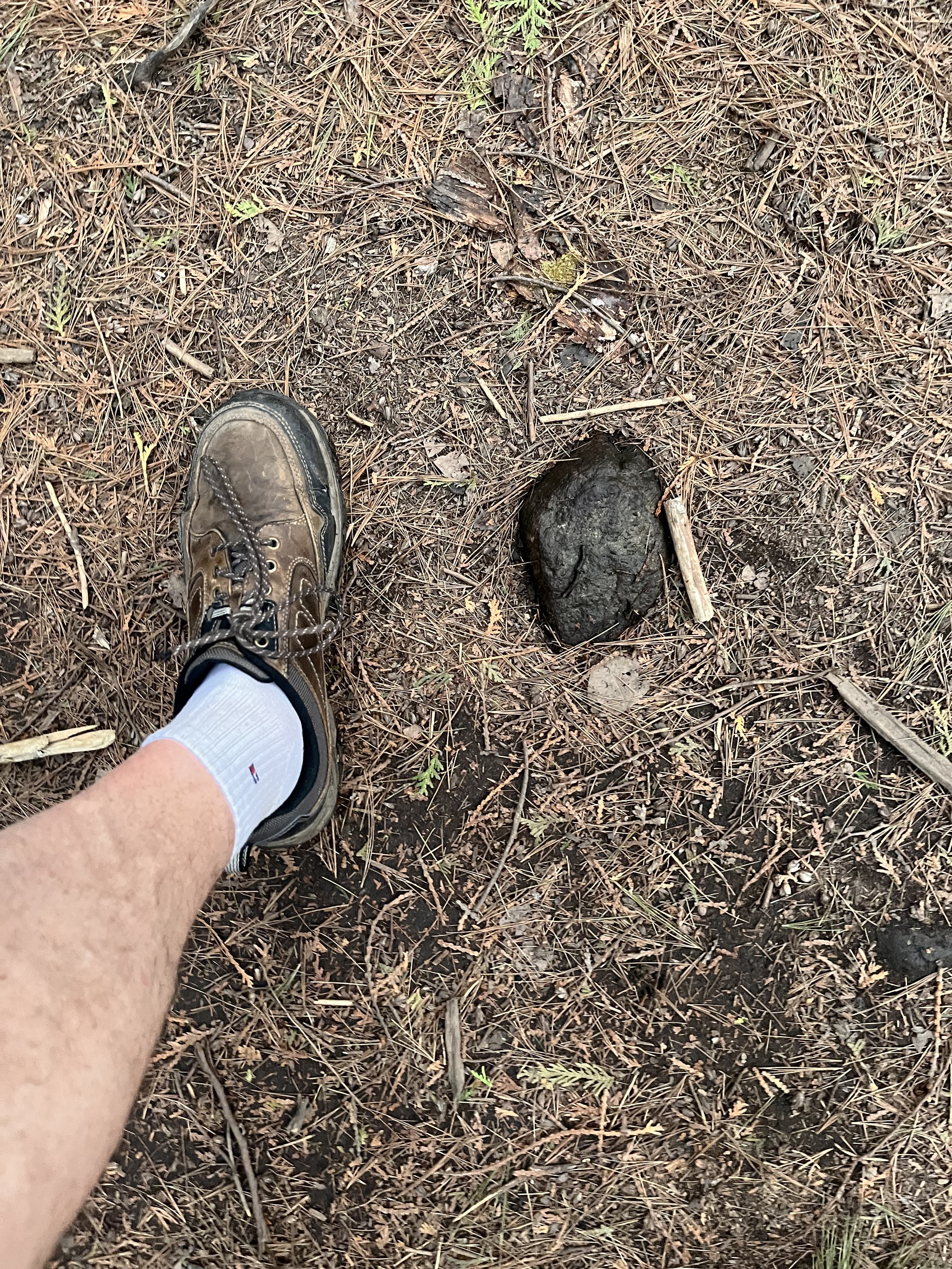
Um, this was my day so far. How was yours?

★ 0 • ↻ 0 original
Apr 21, 2025 · 9:54 AM UTC

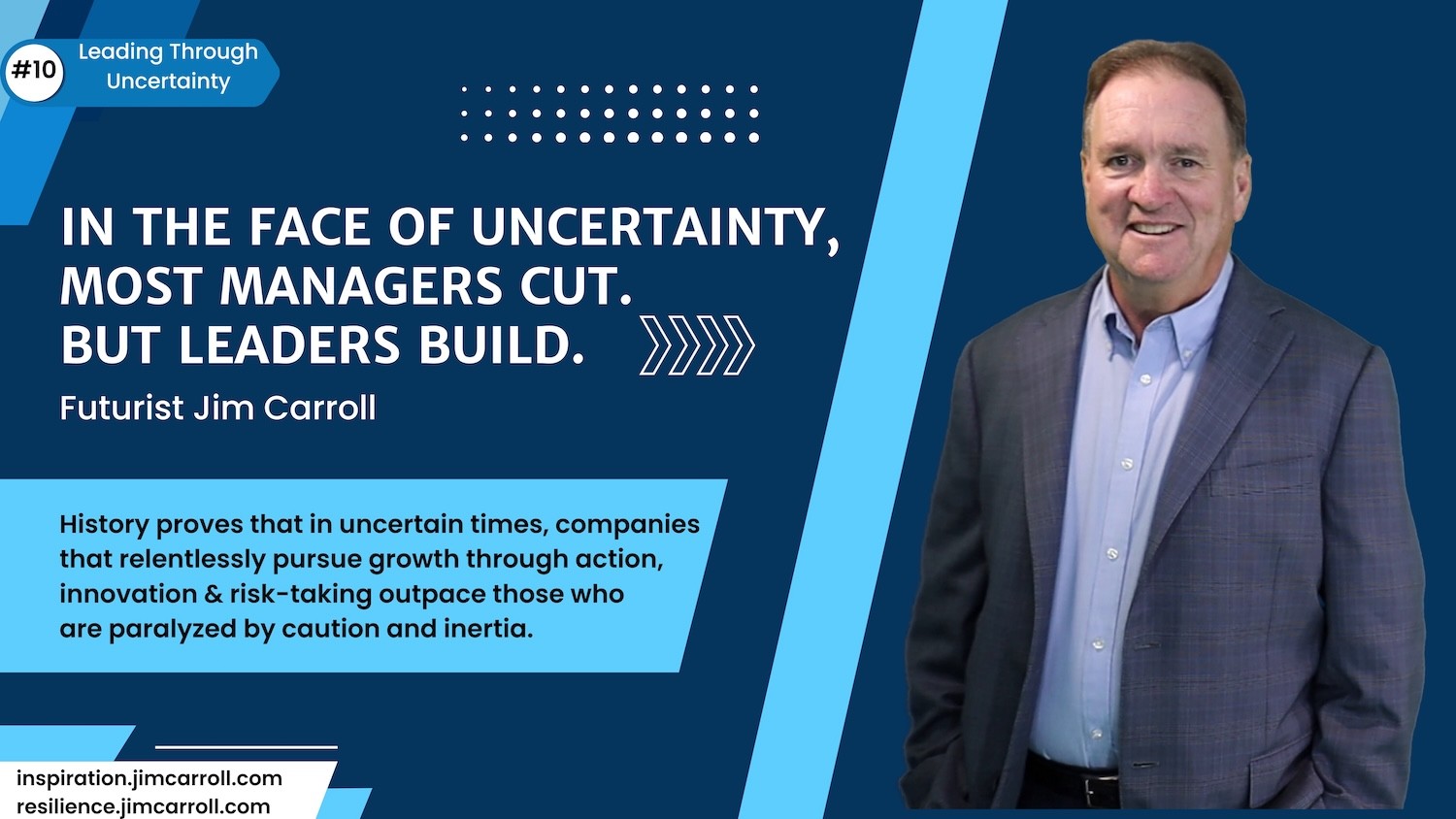
“In the face of uncertainty, most managers cut. But leaders build.” - Futurist Jim Carroll

Anyone can cut costs. Slash and burn. Downsize staff. Close divisions. And in an economic downturn, that becomes the norm.

But there are only a few who can do the opposite - focus on growth.

After nine days of exploring how to lead with resilience, innovation, and momentum, one truth now takes center stage: Growth isn’t a result. It’s a decision.

And in moments of deep uncertainty, the best leaders choose it - on purpose.

Back in 2009, I spoke at a lot of corporate events amid the global economic downturns and witnessed firsthand how different organizations were dealing with it. I vividly remember the message the CEO of one global organization delivered at their leadership summit, sharing their recession roadmap with perfect clarity: “Our strategic priorities: survive, innovate, grow. We’ve done survival. Now we’re focused on building.”

That’s the growth mindset that is needed today. While others pull back, delay projects, freeze spending, and wait for signs of recovery, real leaders are moving forward. Fast. With intent. Because they understand that growth doesn’t happen after the storm passes. It begins now.

Around that time, in an interview with FoodProcessing.com, I shared the story of a global restaurant chain CEO who spoke just after the 2008 financial crisis; I was to follow him on stage for my message on the importance of innovation and looking forward. He opened with one minute on the dismal economic conditions and then spent the next nineteen minutes outlining eight clear growth opportunities.

He didn’t dwell on uncertainty. He obsessed over what came next.

This is how bold leadership sounds.

And in 2025, it’s exactly what’s needed. You might not see it, but this is what is happening in some organizations right now. And maybe it's the precise mindset that you need at this very moment. Right now, some leaders are:
investing with precision — not across-the-board cuts, but selective spending that seeds future wins.

The question isn't: “Will the economy recover?” It's: “Will you be ready when it does?” Or "Will someone else have already captured the ground you hesitated to take?”

So ask yourself: Are you leading from fear? Or building toward growth?
Because in the face of uncertainty, managers cut.

But leaders?

They build.

----
Futurist Jim Carroll knows that history shows us that 10% of organizations become breakthrough performers in times of economic volatility.

**** **** **** **** **** **** **** **** **** ****

Original post: jimcarroll.com/2025/04/decodin

★ 1 • ↻ 1 original
Apr 22, 2025 · 9:38 AM UTC

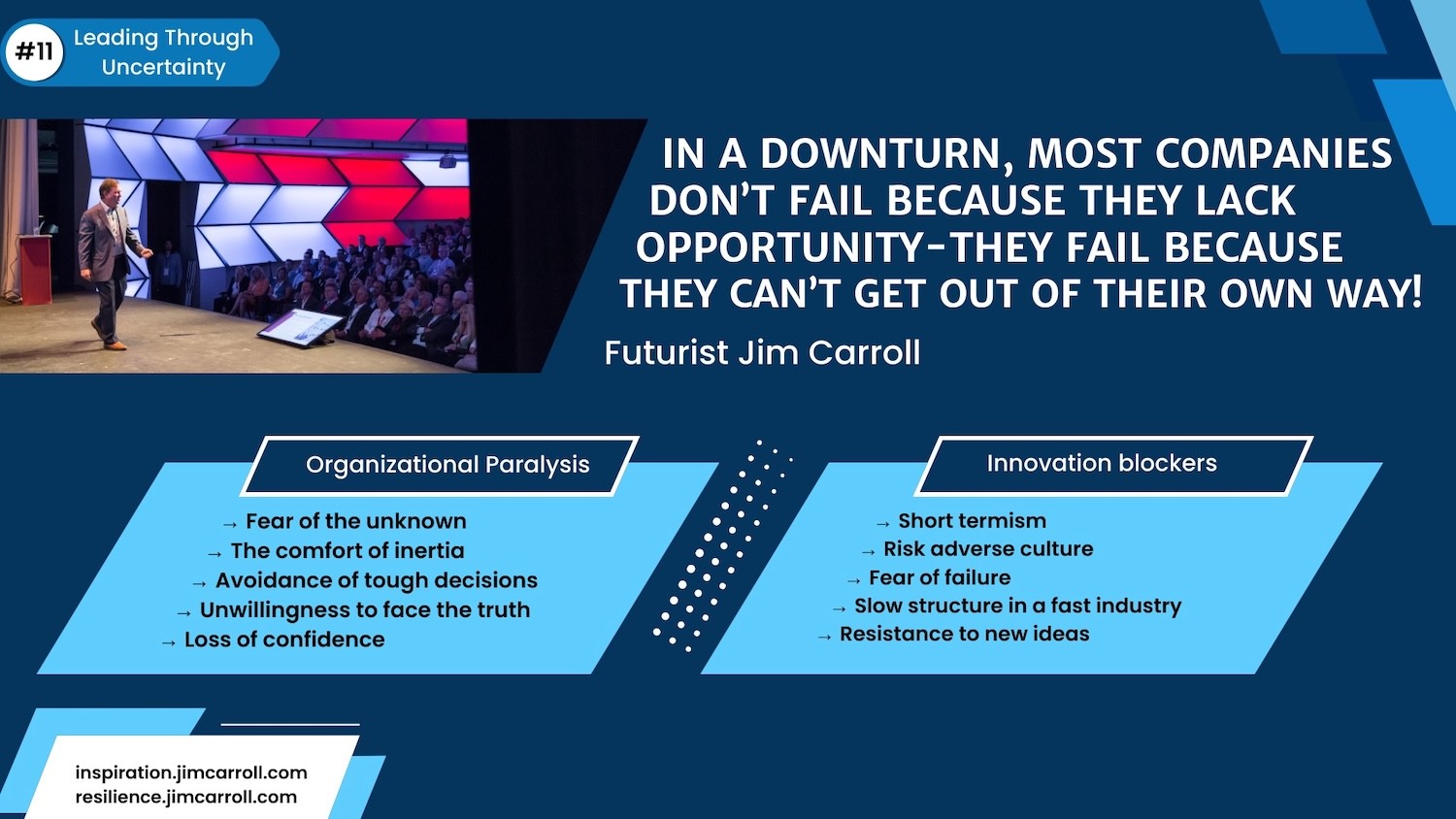
"In a downturn, most companies don’t fail because they lack opportunity - they fail because they can’t get out of their own way." - Futurist Jim Carroll

Leaders build. Managers cut. That much is known. What is also known is that if you want to grow during a downturn, now is the time to move, not wait.

But let’s be honest. You can’t build what’s next if you’re still stuck in what’s holding you back.

That’s what this post is about.

Before you get into a growth mindset in a downturn - which seems like a contradiction - you have to face the barriers that will hold you back. And here's what I know from the advising leadership team during every major downturn since 2001: recessions don’t just expose economic volatility. They expose internal vulnerability.

What are those vulnerabilities? Business models that no longer fit. Teams that are afraid to act. Cultures allergic to risk. Short-term thinking that kills long-term opportunity. Things like that. Over time, I've seen a clear pattern emerge in the way organizations respond to volatility - there are two kinds of companies:

- those who got stuck in their economic rut, too paralyzed to move

- and those who became fast, focused, and fearless innovation leaders

Both types were in the same economy - but only one type made it to the other side stronger.

So what separates them? It’s not industry. Not funding. Not even market conditions. It’s this: the ability to confront what’s really holding them back. Because the reality is big disruption happens during big uncertainty, but most companies miss it, because they’re too focused on defending the past instead of designing the future.

So ask yourself:

What’s holding you back right now?

What decisions are you avoiding?

What assumptions or habits are you still clinging to?

Because before you can talk about growth strategy…before you can reimagine business models…before you can disrupt...you need to confront what’s holding you back.

This isn’t about what’s happening around you.

It’s about what’s happening inside your organization.

---

Futurist Jim Carroll believes that this current moment in time is as much an innovation story as it is a recession story. Act accordingly.

**** **** **** **** **** **** **** **** **** ****

Original post: jimcarroll.com/2025/04/decodin

★ 0 • ↻ 2 original
Apr 22, 2025 · 7:40 PM UTC

One will make you laugh.

𝙏𝙝𝙚 𝙤𝙩𝙝𝙚𝙧 𝙬𝙞𝙡𝙡 𝙢𝙖𝙠𝙚 𝙮𝙤𝙪 𝙢𝙤𝙫𝙚.

mediocrity.jimcarroll.com

★ 0 • ↻ 0 original
Apr 22, 2025 · 9:28 PM UTC

Gee.

★ 0 • ↻ 0 original
Apr 23, 2025 · 10:05 AM UTC

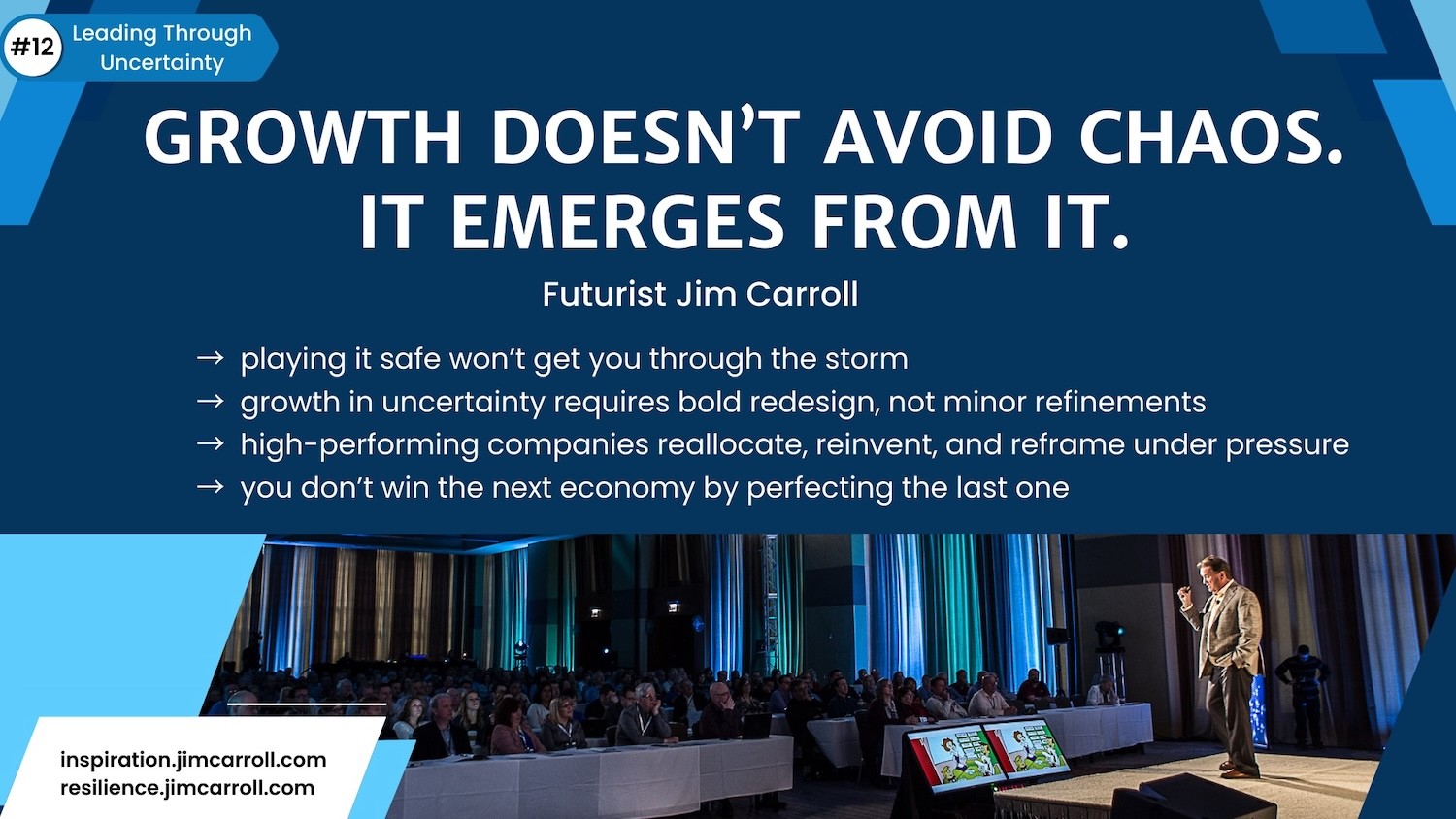
"Growth doesn't avoid chaos. It emerges from it." - Futurist Jim Carroll

You don’t rebuild for the future by protecting the past - particularly during a downturn.

So let's recap. In the first ten posts of this series, I've covered how belief, vision, action, and momentum create forward motion, even amid chaos. And yesterday, I pulled back the curtain on why many organizations fail to make that motion: fear, inertia, denial, and outdated thinking. You know, organizational sclerosis stuff!

Now we turn a corner.

Because once you’ve cleared the internal barriers…once you’ve named what’s been slowing you down… the next step is this: growth. And growth doesn’t come from optimizing what used to work. It comes from disrupting it. As they say, if you keep doing what you've always done, you'll get what you've always got! This will become exacerbated even more in the wild year that is 2025.

Fact is, In a downturn, many companies fall into a dangerous trap: they tweak the old playbook, hoping that what worked before will work again. So they shave budgets instead of rewriting business models. They cut costs without realigning purpose. They focus on “efficiency” instead of rethinking how they create value. They keep trying to sell the old product or service when the market suddenly needs a new one.

That’s not a strategy. That’s maintenance. And it fails every time

The companies that grow during volatility? They do the opposite. They redesign, not refine. They reinvent, not recover. They know that you won’t win in the next economy by trying to redo the last economy better. Here’s how high-performing, future-ready companies build through disruption—not despite it:

- they create new value, not just cut costs

- they launch new offerings that solve urgent problems in emerging markets or underserved segments.

- they reallocate skills and teams aggressively to solve problems, fast

- they implement a strategy of focusing on core customers to defend key revenue

Talent, capital, and attention all shift. They move decisively away from underperforming bets and double down on future-ready opportunities. They break their assumptions.  They don’t ask how to make something slightly better. They ask what it would look like if they had to build it from scratch for today. They eliminate internal friction.  Bureaucracy, bloated processes, and clunky systems are removed. They rebuild for speed and simplicity. They accelerate decisions with small, empowered teams that test, launch, and adapt.

They don’t wait for perfect clarity—they create clarity through motion.

They shape what comes next.

They grow.

Original post: jimcarroll.com/2025/04/decodin

★ 0 • ↻ 0 original
Apr 24, 2025 · 9:34 AM UTC

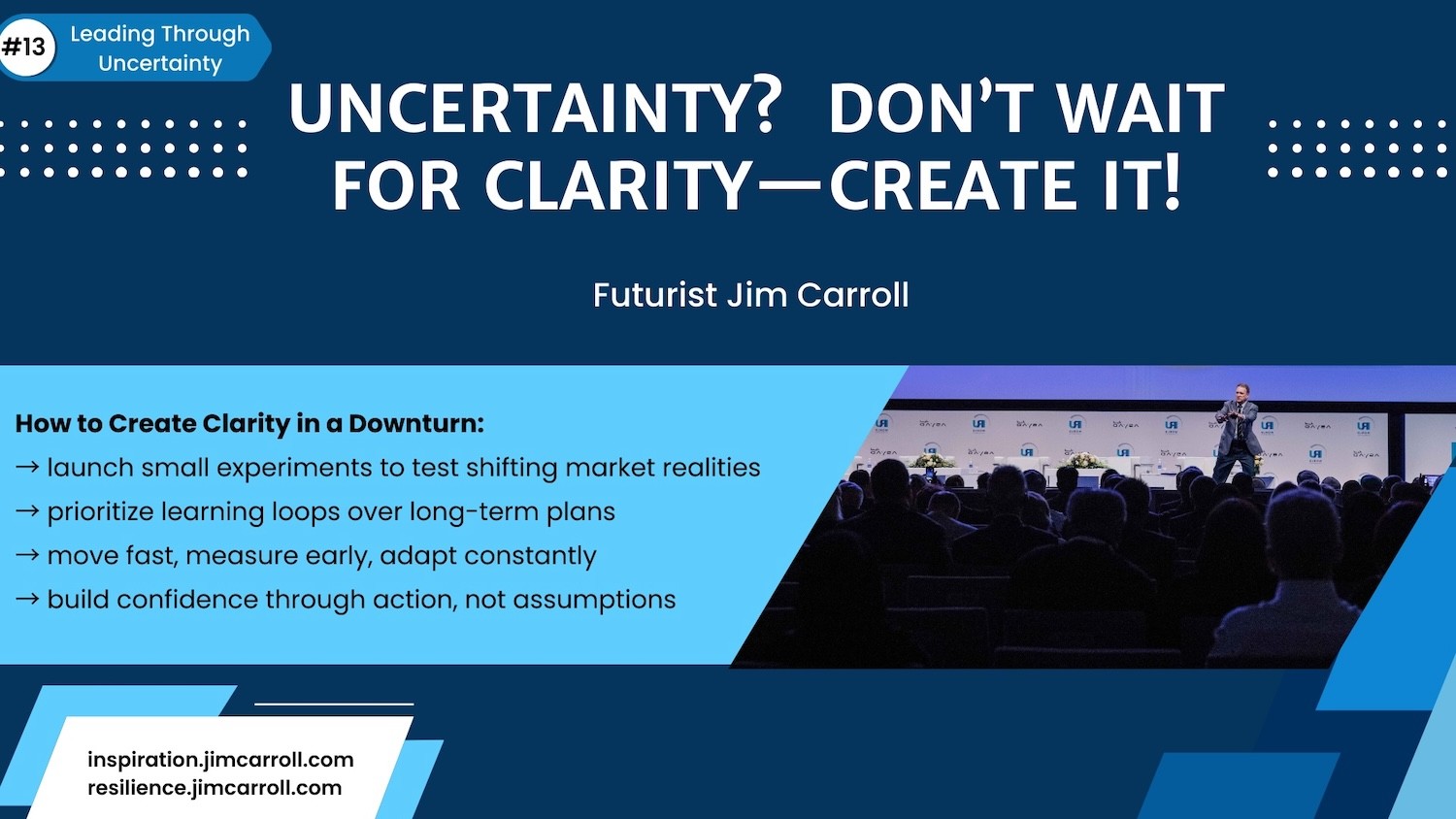
"Uncertainty? Don't wait for clarity —create it!" - Futurist Jim Carroll

In a downturn, experimentation isn’t risky. It’s responsible - because it helps to build some clarity where often that clarity does not yet exist.

That doesn't seem intuitive. In uncertain times, it’s easy to assume that clarity comes from caution - that the path forward will emerge once the noise dies down, once the data stabilizes, and once the market settles.

You end up waiting a long time for that! You end up waiting for clarity that never comes, because here’s the truth: clarity doesn’t arrive. It’s earned.

And the way you earn it—especially in a downturn—is by moving.

Testing. Learning. Iterating. Acting. Trying ideas to see what works. Doing things for the sake of doing, not necessarily for the big win, but to figure out what works, and what does not. And in doing so, you create your sense of clarity.  That’s how you cut through the fog. That’s how you avoid paralysis.

That’s how you lead.

Experiments are your edge in an era of uncertainty because they are fuel to ignite clarity that is otherwise missing. Remember what I've said in this series - in times of economic pressure, many organizations retreat into stasis They pause product launches, cancel initiatives, and wait for signals. But the companies that thrive in a downturn do the opposite: They turn uncertainty into a laboratory. They run small tests. They build fast prototypes. They launch controlled rollouts. They create momentum—and clarity—through movement.

That’s not reckless. It’s responsible. And it builds something more valuable than predictions or plans: experiential capital.

Here’s how you start building that advantage now:

- launch a live test. Choose one customer segment. Try something new. Measure real results.

- prototype under pressure. Push a rough idea into the market. Let feedback shape the next version.

- accelerate learning loops. Replace long planning cycles with fast experiments. Learn weekly, not quarterly.

- capture insight. Build a shared learning bank. Don’t waste failure—mine it for gold.

- empower your team to try. Make experimentation safe. Celebrate effort, not just outcomes.

- rush something forward. It doesn’t have to be perfect—just real. Let motion build momentum.

- track what works. Treat every test as a data generator. Use outcomes to refine, redirect, and repeat.

- build a culture of motion. Innovation isn’t a project. It’s a mindset. You build it by doing.

Use urgency as fuel. In the face of hesitation, push forward. Action reveals what planning can’t. Make experiential capital your strategy. In a world that punishes delay, the most learned win..

Original post: jimcarroll.com/2025/04/decodin

★ 0 • ↻ 0 original
Apr 25, 2025 · 10:10 AM UTC

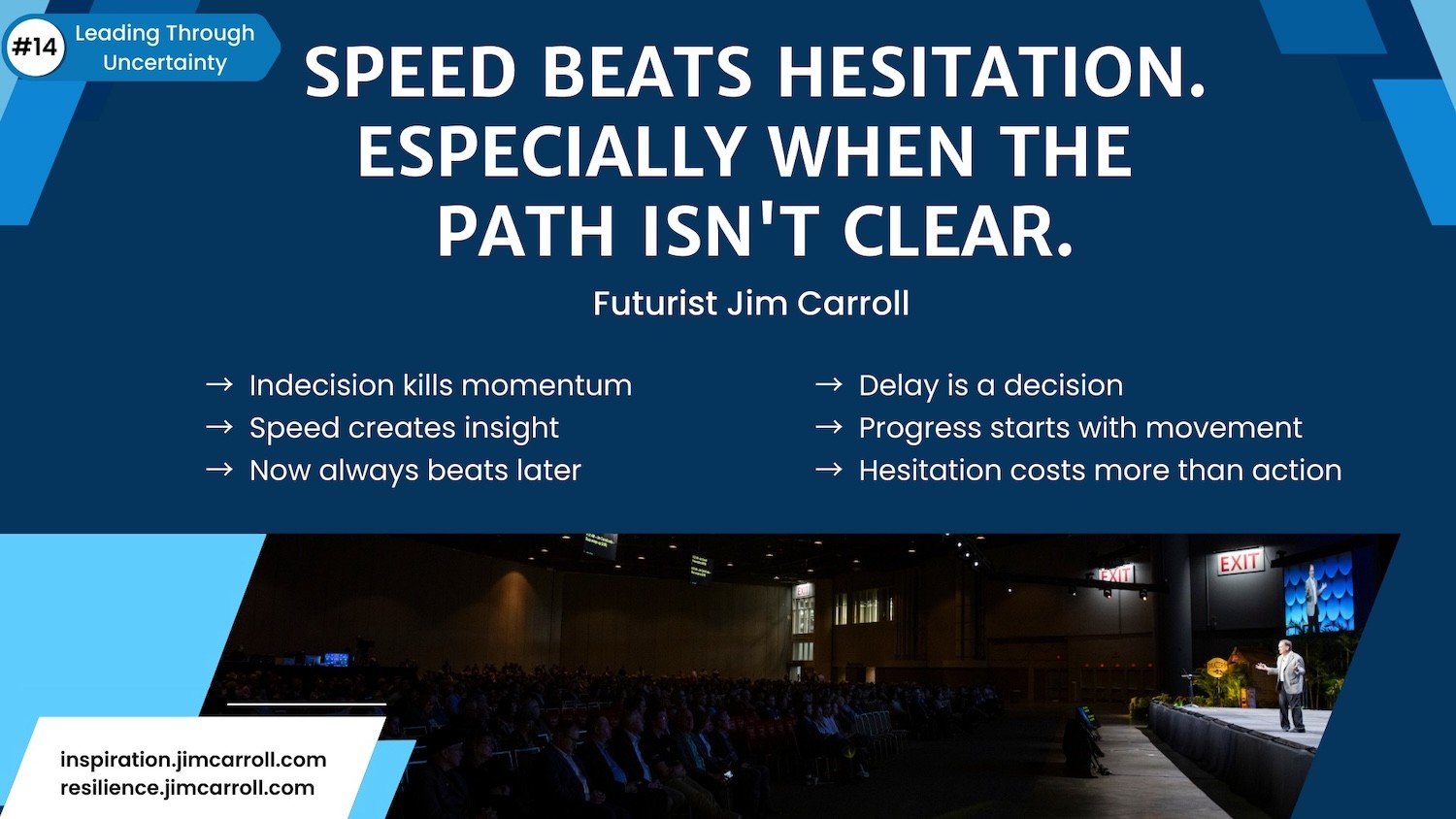
"Speed beats hesitation. Especially when the path isn't clear." - Futurist Jim Carroll

In a downturn, momentum matters more than perfection. Delay costs more than missteps. The biggest risk isn’t moving too fast—it’s moving too slow while the world speeds up.

And yet, In times of uncertainty, the most natural instinct of all is to wait. Wait for the data. Wait for a signal. Wait until the noise settles, the picture clarifies, and the next steps feel obvious. But here’s what too many leaders forget - the path forward doesn’t get clearer by standing still, it gets clearer by moving.

We are deep into a moment when the cost of indecision is far greater than the cost of action, and the trap of your 'aggressive indecision' becomes more significant every day. I've seen it play out countless times: a moment of economic volatility hits, and leadership teams and people fall into a state in which they decide the easiest decision to make is to simply .... not make them.

It’s not that they don’t care. It’s that they overthink things. They fritter away time in endless meetings. They chase every scenario. They wait for perfect timing. They pause strategic initiatives. They delay customer-facing launches. They stall their momentum—believing they’re being cautious when in reality, they’re just stuck. And so in a world in which the future belongs to those who are fast, they slow down.

And while they stall? Markets shift. Competitors move Talent gets restless. Customers look elsewhere. That's the wrong thing to do - history favors the decisive, and who move at the speed demanded by fast-changing circumstances.

Data backs this up. A comprehensive Harvard Business Review study of 4,700 public companies over three recessions found that the top performers weren’t the ones who paused—they were the ones who acted strategically, quickly, and with confidence. Only 9% of companies outperformed their peers after a downturn—and they did it by balancing discipline with decisive moves at speed. A McKinsey study found the same: companies that moved first and fast during a downturn consistently gained market share during the recovery.

In short? While caution may feel responsible, the real risk lies in hesitation.

Doing nothing often costs far more than doing something imperfectly.

So what should you do? Start moving. Fast. Start moving before you’re ready - simply because you know that speed matters.

----
Futurist Jim Carroll recognizes that moving at speed matters and that with this period of uncertainty set to linger for quite some time, a book to help leaders dance through the rain is timely.

**** **** **** **** **** **** **** **** **** ****

Original post: jimcarroll.com/2025/04/decodin

★ 0 • ↻ 0 original
Apr 27, 2025 · 7:56 PM UTC

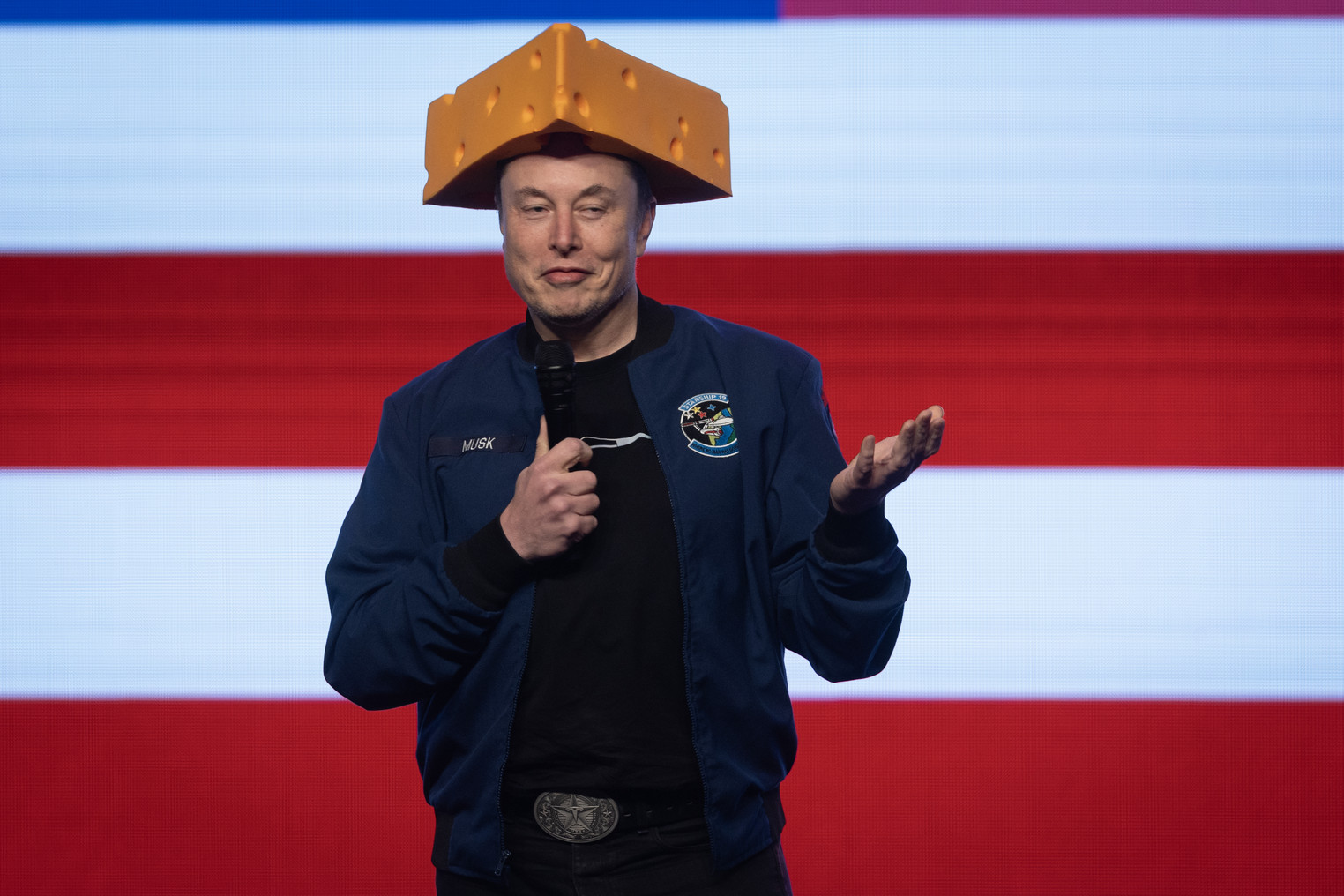
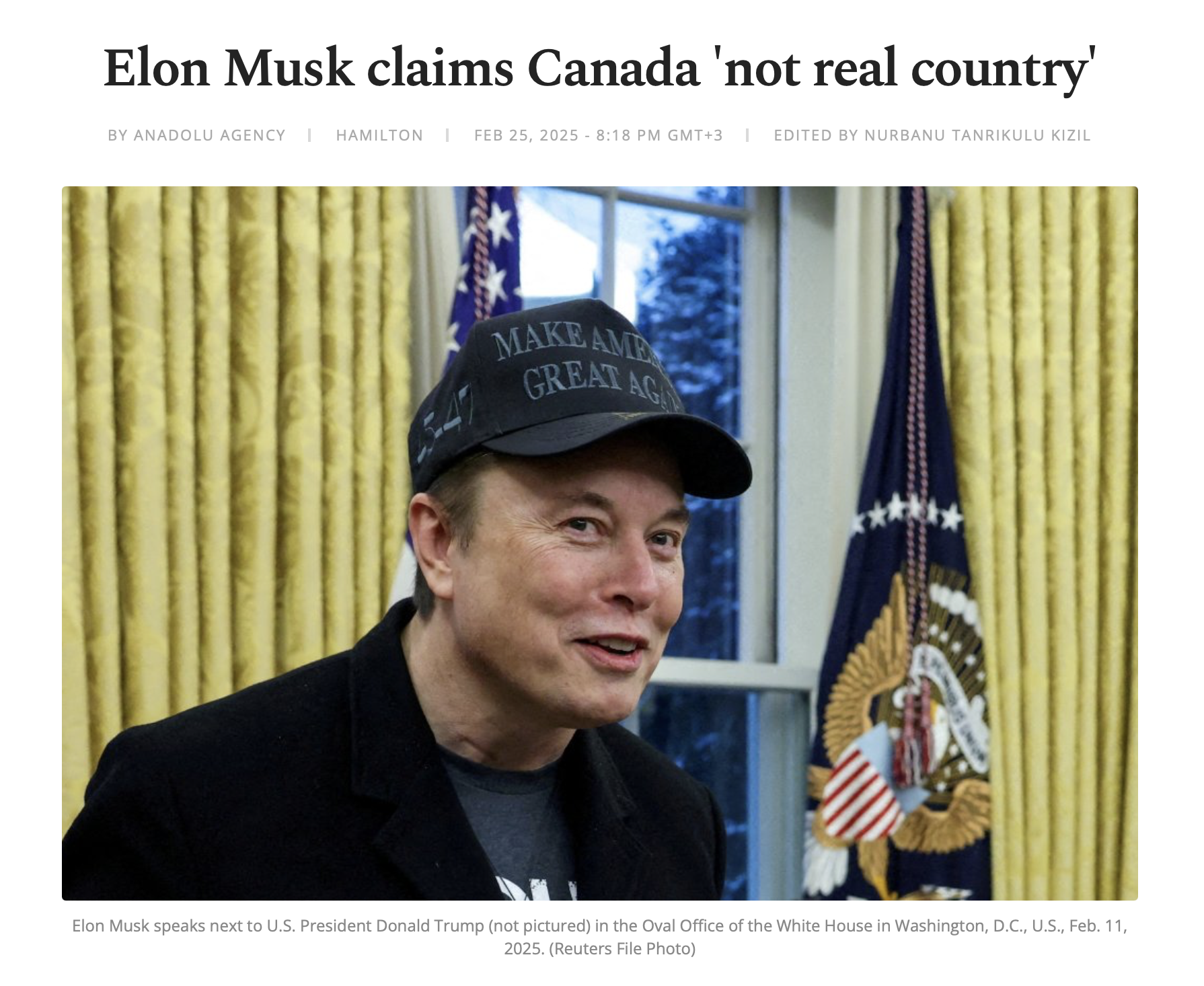
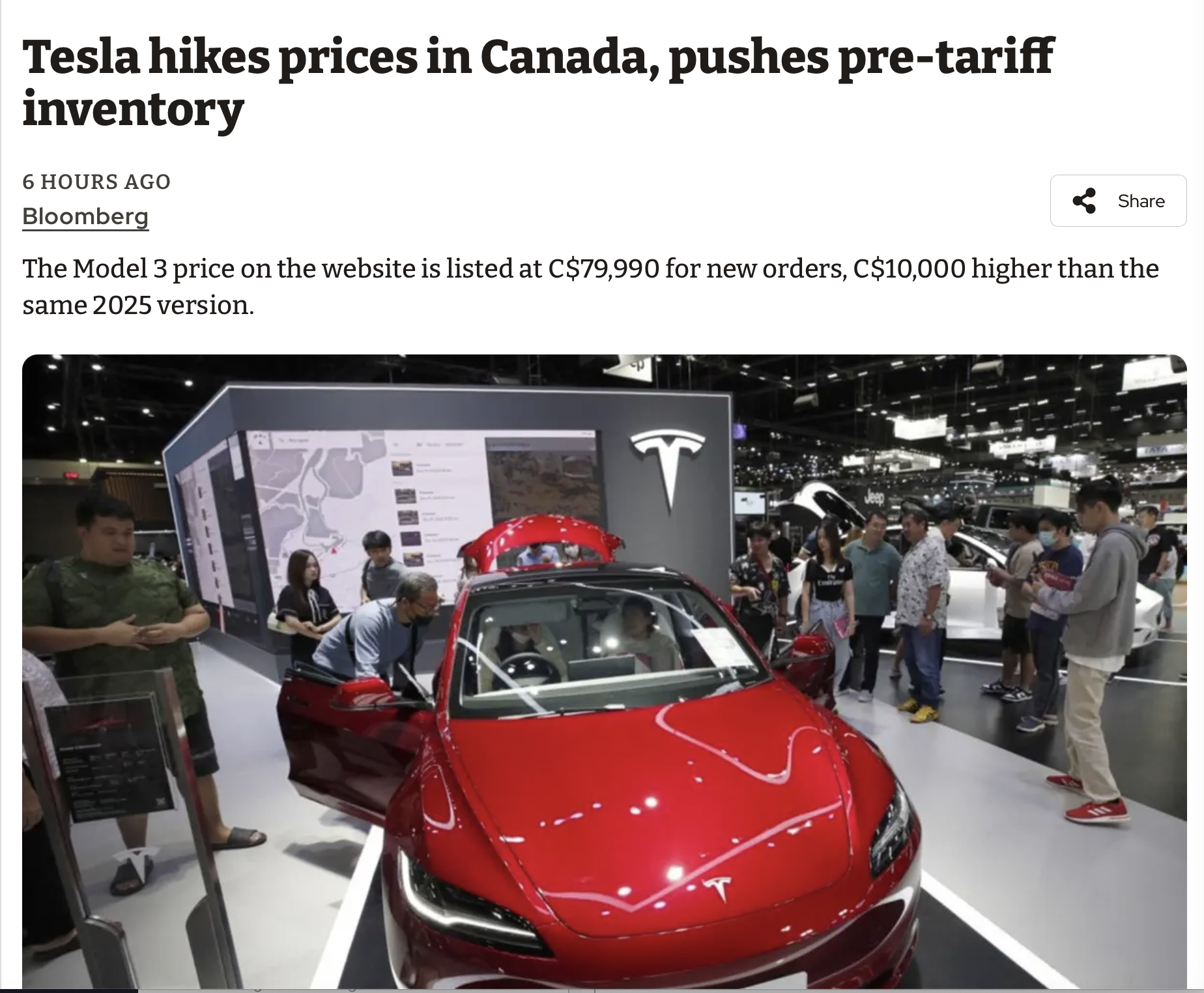
Canada feels so bad for him, LOL.

News headline - Elon Musk claims Canada is not a real country.Tesla hikes prices in Canada due to tariffs
★ 0 • ↻ 0 original
Apr 28, 2025 · 9:41 AM UTC

"Leaders who think beyond the current storm are the ones who shape what happens after it." - Futurist Jim Carroll

Here's a key thing to think about: strategic foresight always beats tactical firefighting.

The strongest organizations think beyond today’s chaos—and start building the world they want to lead. That's because they know that economic growth always follows the minds that create the ideas of tomorrow, and they know it's better to be one of those minds.

Most leaders and organizations don't do this though. It’s easy, in a time of volatility, to fall into survival mode. Watching the headlines, managing today’s problems, and delaying everything else. But if history teaches us anything, it's this: the companies that think beyond the current storm are the ones that shape what happens after it.

They don't just react to the present—they create the future. They subscribe to the most important statement about the future made by Bill Gates: "Most people tend to overestimate the rate of change on a two-year basis, but underestimate change on a ten-year basis." With that in mind, they know one of the most important things they need to be doing right now is to ensure they have a firm grasp of what comes tomorrow - and what they need to do about it.

Why does it matter? Leadership during uncertainty isn’t just about managing immediate fires. It’s about constantly asking: “What world will emerge next—and how do we lead it?” Forward-oriented thinking forces you to operate across two horizons: managing today’s pressures realistically, and strategizing tomorrow’s opportunities relentlessly. You can't do the latter if you don't have a firm grasp on what comes tomorrow.

McKinsey research shows that companies that allocate resources based on future trends—not just past results—outperform their industry peers by nearly 40% over 10 years. The fact is, short-term thinking Is a trap but sadly, it has become the norm. When volatility rises, leadership conversations shrink - from multi-year strategy to monthly budgets; from future innovation to weekly crisis meetings; from new market creation to operational firefighting; and from big, bold, long-term visions to small, narrow daily actions.

And the fact is, the longer you stay trapped today, the further you fall behind the leaders building tomorrow. The future doesn't slow down in a recession - it speeds up.

You can’t sit back and hope the future will be kind to you. You have to go out and shape it.

The companies that will dominate the next decade are already investing in new capabilities, technologies, markets, and ideas—even while today’s challenges are raging. 

Realize this: tomorrow’s winners are already thinking past today's chaos.

**** **** **** **** **** **** **** ****

Original post: jimcarroll.com/2025/04/decodin

★ 2 • ↻ 3 original
Apr 28, 2025 · 9:58 PM UTC

There's an election today in Canada. I'm Canadian. I've done my darndest not to post about it, or to share my views. That said, I'm on the record that all the 51st state is just idiotic. Short of an actual invasion and war, there is no legal way to even see it come about in the context of the US and Canadian constitutions.

So with the election, I've not posted about it or shared my opinion. It's pretty damned hard to do this. We all know that these days if we say anything online, flame wars ignite.

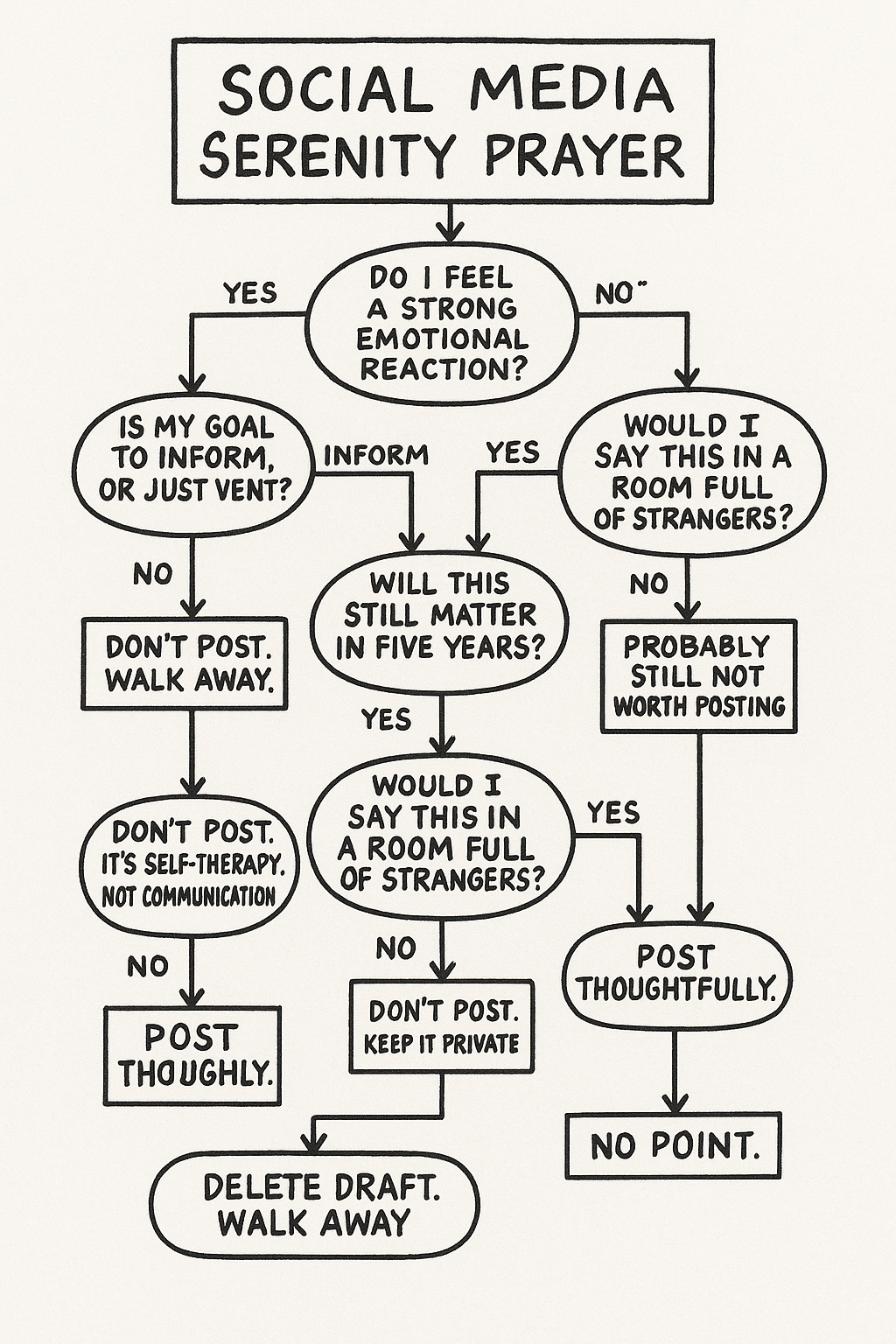
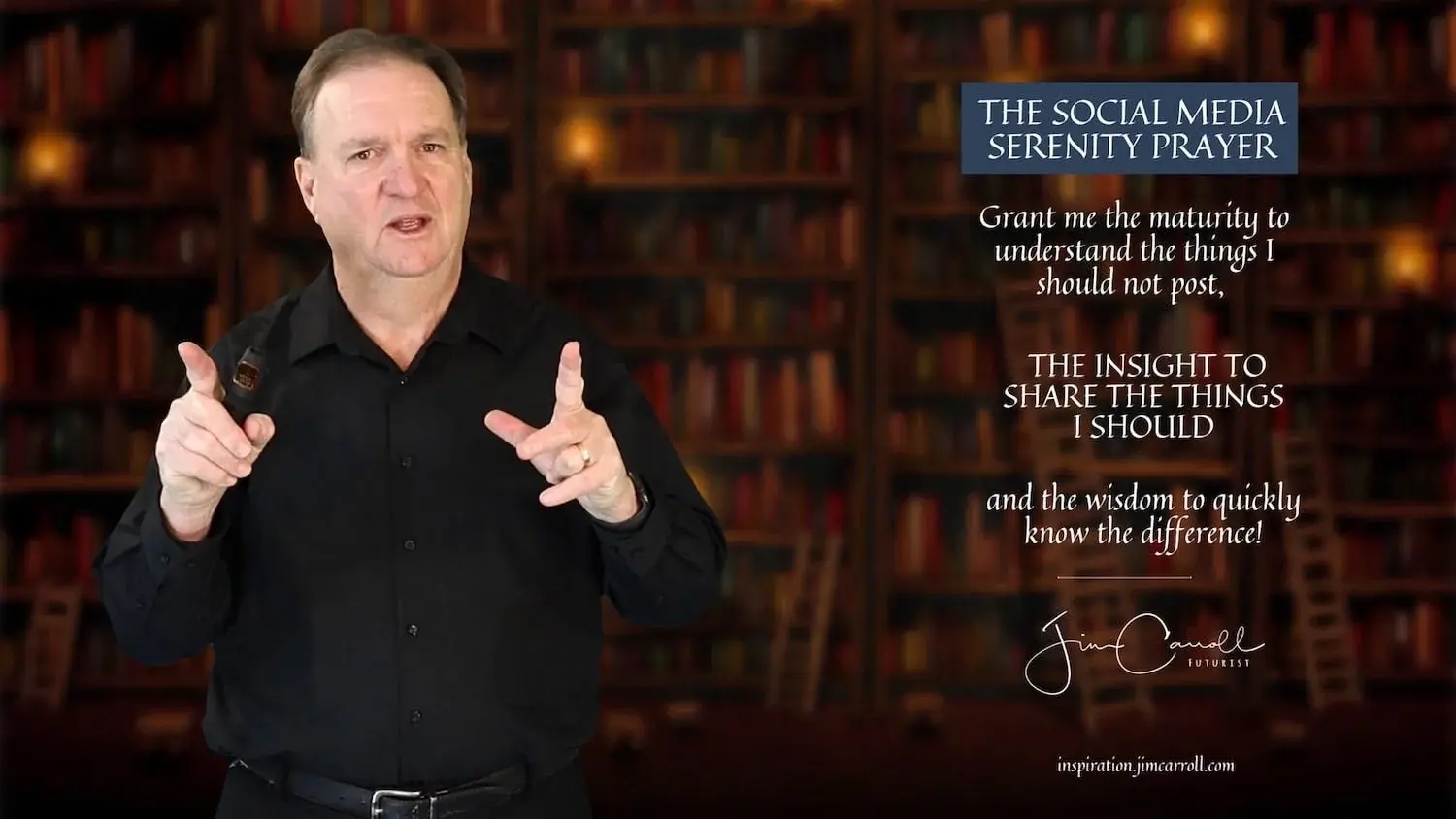
That's why I wrote my Social Media “Grant me the maturity to understand the things I should not post, the insight to share the things I should, and the wisdom to quickly know the difference!”

I had ChatGPT take a crack at putting this into a flowchart. Folks might find this useful in the future.

My original post is here.

Oh, and I voted, in an advance poll a few weeks ago.

jimcarroll.com/2022/01/daily-i

★ 1 • ↻ 2 original
Apr 29, 2025 · 9:42 AM UTC

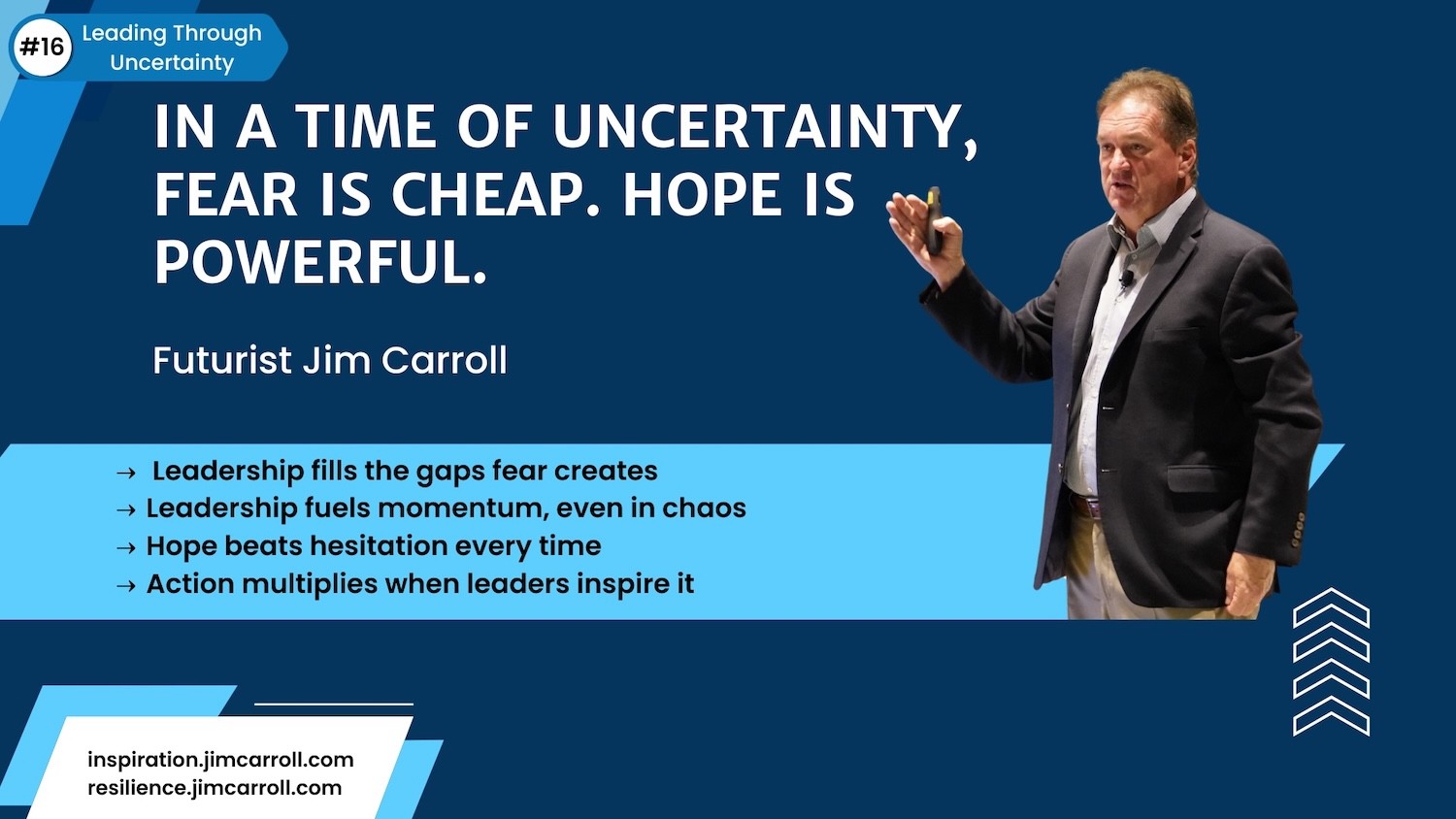
"In a time of uncertainty, fear is cheap. Hope is powerful." - Futurist Jim Carroll

Throughout my career, I've often made fun of many motivational speakers.
I certainly see a lot of them - they are often on the agenda with me at the conferences and events at which I speak. And look, there are some really good ones - they could motivate you to run across the Sahara in a bathing suit while eating broccoli. At the same time, many just have a bit of a schtick. I find they are a little bit like Chinese food - you are wildly surprised and super-motivated for an hour and then kind of forget about it. And besides, I don't think walking on fire bricks can make you a better person.

With that bit of cynicism out of the way - and I'm sure they can lob lots right back at us futurists - I will admit that I have billed myself for a time as a "motivational futurist." That's not a stretch - after all, my job is not just to help people understand the trends that define tomorrow, but to give them some motivation as to what to do to get there.

That type of thing is also the role of anyone in any type of leadership position - your job is to motivate people to align with what comes next. The simple facts behind this reality are simple. Leaders lead. They set the tone. They establish the vision. They guide the path forward. They motivate their team. They inspire them to do what's necessary. Leadership is all about lifting people up, and not letting fear drag them down.

And all of this becomes ten times more important during a time of volatility, chaos, and uncertainty. Why? In a downturn, people lose sight of the future because of fear and uncertainty. The lack of clarity and the relentless pounding of news headlines and social media posts means that fear is accentuated.

Think about it: everyone on the team is worried, cautious, and seeking clarity—at a time when clarity is in short supply. They're confused, stressed, and looking for signs of guidance. Without it, they spin their wheels. In times of uncertainty, this becomes a deadly mix:

- fear spreads faster than facts.
- caution hardens into paralysis.
- people stop moving toward opportunity—and start freezing around problems.
- without strong leadership, a team’s mindset collapses inward.
- the survival instinct takes over.
- momentum evaporates.

That's why, in a downturn, the most important role of a leader in this circumstance is to fill in the gaps - the gaps in confidence, courage, clarity, and commitment.

---
Futurist Jim Carroll still considers himself to be a motivational futurist, but doesn’t suggest that people walk on fire stones to find their tomorrow.

**** **** **** **** **** **** **** **** **** ****

Original post: jimcarroll.com/2025/04/decodin

★ 1 • ↻ 0 original
Apr 30, 2025 · 9:42 AM UTC

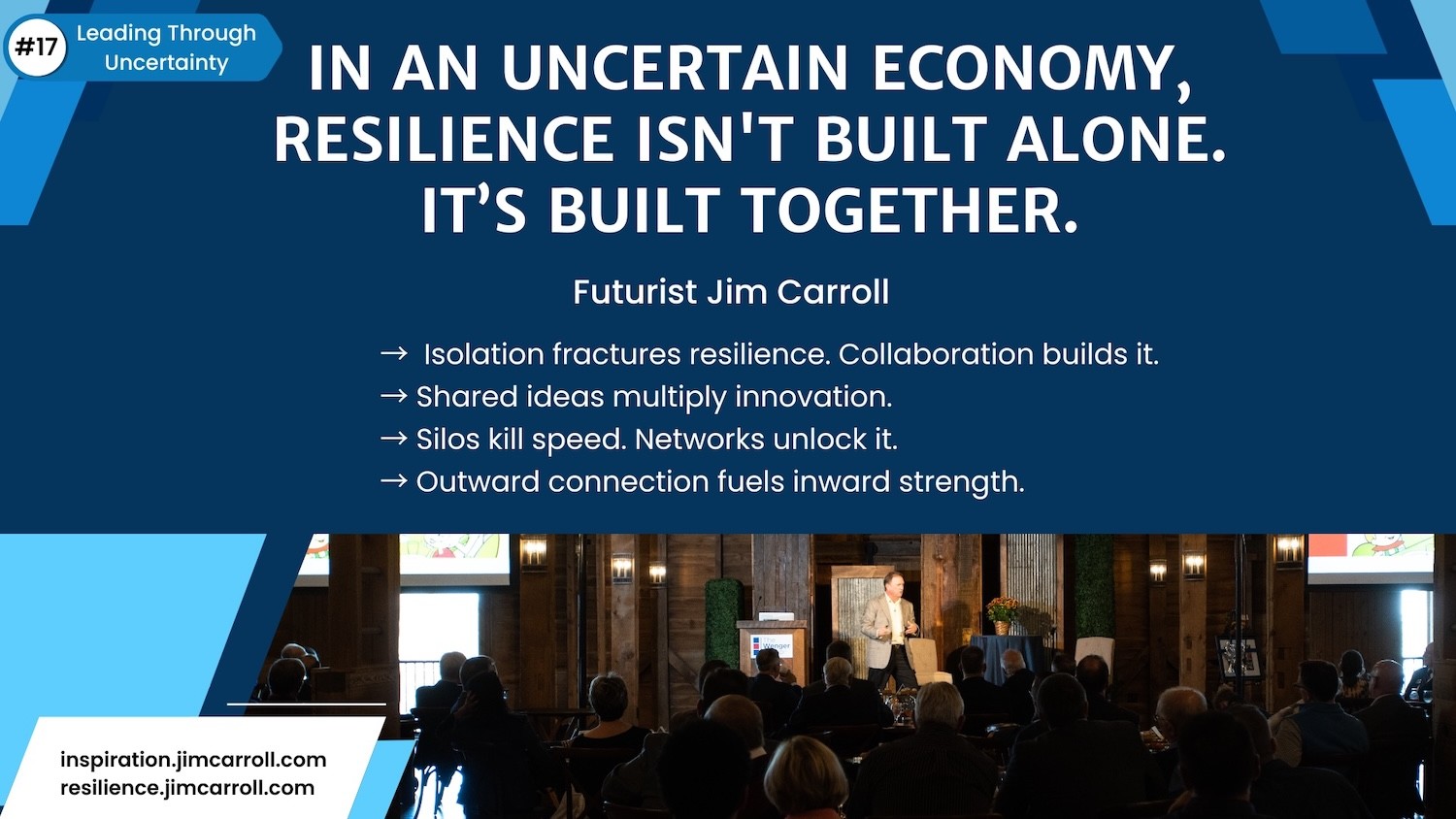
"In an uncertain economy, resilience isn't built alone. It’s built together." - Futurist Jim Carroll

I've long shared this quote on stage: "If I have an idea and you have an idea, we have two ideas. If we share those ideas, we have a movement."

That's the power of collaboration - something that is one of the most important hidden assets of any organization.

And, you know what I am going to say - in an economic downturn, this becomes more important than ever before. It becomes a battle of collaboration vs. isolation, with a simple reality that while crises make teams turn inward, their outward connection creates resilience.

Organizations that build stronger networks during downturns emerge stronger, faster, and future-ready.

Why is that? Ideas are currency, fuel for recovery, and the more ideas flow, the more collaborative thinking flows. That's why in volatility, connection beats isolation. And yet, economic volatility often triggers a dangerous instinct: retreat. Organizations turn inward, teams break into silos, and collaboration shrinks - and as a result, creativity suffocates and the idea factory slows down or worse, stops.

But if history has shown us anything, it’s this: organizations that lean outward—toward partnerships, extended idea ecosystems, and shared ideas—are the ones that not only survive uncertainty but surge ahead when recovery comes.

The fact is that isolation fractures resilience. Collaboration builds it. So the most important thing you can be doing right now is to build your collaborative spirit.

Original post: jimcarroll.com/2025/04/decodin

★ 0 • ↻ 0 original
← March 2025May 2025 →